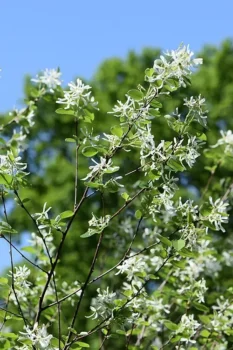
Amelanchier ovalis: A European Beauty Worth Considering for Your Garden
If you’re looking to add some European charm to your garden, Amelanchier ovalis might just be the plant you’ve been searching for. This delightful shrub, also known by its synonym Amelanchier vulgaris Moench, brings a touch of Old World elegance to American landscapes with its stunning seasonal displays and wildlife-friendly nature.
What Makes Amelanchier ovalis Special?
This European native puts on quite a show throughout the growing season. In spring, it produces clusters of small white flowers that practically glow against the emerging foliage. Come summer, these blooms transform into blue-black berries that wildlife absolutely love. But perhaps the most spectacular display happens in fall, when the leaves turn brilliant shades of orange and red, creating a fiery finale before winter arrives.
Where Does It Come From?
Amelanchier ovalis hails from the mountainous regions of central and southern Europe, where it has adapted to thrive in challenging conditions. This hardy background makes it quite resilient in garden settings, though it’s worth noting that it’s not native to North America.
Garden Design Potential
This versatile shrub can play several roles in your landscape design:
- Rock gardens where its compact nature shines
- Wildlife gardens as a food source for birds
- Naturalized areas for a more relaxed, woodland feel
- Mediterranean-style gardens where it complements the aesthetic
Growing Conditions and Care
One of the best things about Amelanchier ovalis is how easygoing it is once you understand its preferences. This shrub thrives in USDA hardiness zones 4-7, making it suitable for a wide range of climates.
Ideal growing conditions include:
- Well-draining soil (it’s quite forgiving about soil quality)
- Full sun to partial shade
- Good air circulation
- Space for its natural form to develop
Planting and Care Tips
Getting your Amelanchier ovalis off to a good start is pretty straightforward. Plant it in spring or fall, giving it plenty of room to spread. Water regularly during its first year while the roots establish, but once mature, this tough little shrub becomes quite drought tolerant.
The beauty of this plant lies in its low-maintenance nature. Minimal pruning is needed – just remove any dead or crossing branches in late winter. Over-pruning can actually reduce flowering and fruiting, so less is definitely more with this species.
Wildlife and Pollinator Benefits
Your garden visitors will thank you for planting Amelanchier ovalis. The spring flowers attract bees and other pollinators when they need early-season nectar sources most. Later in the season, birds feast on the berries, making your garden a bustling hub of activity.
Should You Plant It?
While Amelanchier ovalis isn’t native to North America, it’s also not considered invasive, making it a reasonable choice for gardeners who appreciate its unique qualities. However, if you’re committed to native-only gardening, consider looking into North American Amelanchier species like serviceberry (Amelanchier canadensis) or Saskatoon serviceberry (Amelanchier alnifolia), which offer similar benefits while supporting local ecosystems.
Amelanchier ovalis can be a wonderful addition to the right garden, offering year-round interest with relatively little fuss. Just remember that every garden choice is an opportunity to support local wildlife – so whether you choose this European charmer or opt for a native alternative, you’re creating habitat that benefits the broader ecosystem.