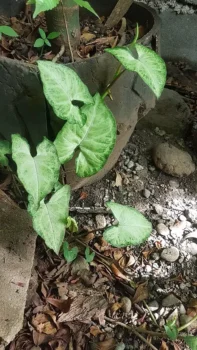
American Evergreen: A Tropical Climber for Warm Climate Gardens
If you’re looking for a lush, tropical ground cover or climbing plant for your warm climate garden, you might have encountered the American evergreen (Syngonium podophyllum). This perennial vine brings a jungle-like feel to landscapes, but there are some important things to know before adding it to your garden.
What is American Evergreen?
American evergreen is a twining and climbing plant with relatively long stems that can be either woody or herbaceous. Despite its common name, this species isn’t actually native to America. Originally from tropical regions of Central and South America, including Mexico and northern South America, it has found its way into gardens and natural areas across warmer parts of the United States.
Where You’ll Find It Growing
In the United States, American evergreen has established itself in Florida, Puerto Rico, and the U.S. Virgin Islands. It’s considered a non-native species that reproduces spontaneously in the wild and tends to persist in these areas without human intervention.
- Species observed
- No observations
The Look and Feel
One of the most appealing aspects of American evergreen is its attractive foliage. The plant produces heart-shaped to arrow-shaped leaves that actually change form as the plant matures – pretty cool, right? You might find varieties with attractive variegation or solid green coloration, giving you options to match your garden’s aesthetic.
Garden Role and Design Uses
American evergreen can play several roles in your landscape:
- Ground cover in shaded areas where grass struggles to grow
- Climbing plant that can scale trees or structures
- Tropical accent in subtropical and tropical landscape designs
- Naturalized planting in woodland gardens
Growing Conditions and Care
If you’re in USDA hardiness zones 9b through 11, you can grow American evergreen outdoors year-round. This plant cannot tolerate frost, so colder climates will need to treat it as a houseplant or annual.
For successful growing, provide:
- Partial to full shade (it actually prefers less sun)
- Moist but well-draining soil
- High humidity when possible
- Regular watering, especially during dry periods
- Mulching to retain soil moisture
The good news? American evergreen is quite easy to grow once established. The potentially challenging news? It can spread readily and may need containment to prevent it from taking over areas where you don’t want it.
Things to Consider
Since American evergreen is non-native and has shown the ability to establish and spread in wild areas, you’ll want to be mindful about where and how you plant it. While it’s not currently listed as invasive, its ability to reproduce and persist without human help means it could potentially impact local ecosystems.
Consider these native alternatives that can provide similar tropical appeal:
- Native passion vines (Passiflora species) for climbing habit
- Wild ginger species for lush ground cover
- Native ferns for shaded, tropical-looking foliage
The Bottom Line
American evergreen can be a beautiful addition to warm climate gardens, especially if you’re going for that lush, tropical look. Its ease of care and attractive foliage make it appealing to many gardeners. However, being a responsible gardener means considering its non-native status and potential for spread. If you do choose to grow it, monitor its growth and consider containing it to prevent unwanted spreading into natural areas.
Whatever you decide, remember that the best garden is one that brings you joy while being mindful of the local environment. Happy gardening!