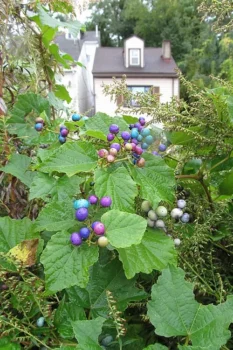
Amur Peppervine: A Beautiful Vine You Should Avoid in Your Garden
If you’ve spotted a vigorous climbing vine with heart-shaped leaves and clusters of colorful berries, you might be looking at Amur peppervine (Ampelopsis brevipedunculata). While this perennial vine might seem like an attractive addition to your landscape, there’s a crucial reason why most gardeners should steer clear of this particular plant.
What is Amur Peppervine?
Amur peppervine is a twining and climbing vine that can spread both through woody and herbaceous stems. This perennial plant is native to temperate regions of Asia, including China, Korea, Japan, and eastern Russia. While it might look harmless—even pretty—this vine has become a significant problem across much of the United States.
Where Does It Grow?
Currently, Amur peppervine has established itself across 19 states, primarily in the eastern United States. You’ll find it growing wild in Connecticut, Delaware, District of Columbia, Georgia, Illinois, Iowa, Kentucky, Maryland, Massachusetts, Michigan, New Hampshire, New Jersey, New York, North Carolina, Ohio, Pennsylvania, Rhode Island, Virginia, and Wisconsin.
- Species observed
- No observations
Why You Should Think Twice Before Planting
Here’s where things get serious: Amur peppervine isn’t just a non-native plant—it’s considered invasive in multiple states. Its invasive status varies by location:
- Invasive: Connecticut, Delaware, North Carolina
- Prohibited: New Hampshire, Wisconsin
- Watch List: Alabama
What makes this vine so problematic? It’s incredibly adaptable and grows aggressively, often smothering native plants and disrupting local ecosystems. Once established, it can be extremely difficult to control or remove.
Attractive but Troublesome Features
It’s easy to see why someone might initially be drawn to Amur peppervine. The vine produces small, attractive berries that change from green to bright blue, creating quite a visual display. Its heart-shaped leaves can turn yellow in fall, adding seasonal interest. The plant also produces small flowers that provide some nectar for insects.
However, these appealing characteristics come with a major downside: the plant’s aggressive growth habit and ability to thrive in almost any condition makes it a garden bully that’s hard to control.
Growing Conditions (If You Encounter It)
Part of what makes Amur peppervine so invasive is its incredible adaptability. This vine can grow in USDA hardiness zones 4-8 and tolerates:
- Various soil types
- Full sun to full shade
- Wet to dry conditions
- Poor soil quality
This adaptability means it can quickly establish itself almost anywhere and outcompete native plants that are more specialized in their needs.
Better Native Alternatives
Instead of planting Amur peppervine, consider these native climbing vines that provide beauty without the ecological problems:
- American groundnut (Apios americana): Produces fragrant flowers and edible tubers
- Wild grape (Vitis species): Offers food for wildlife and attractive fall color
- Virginia creeper (Parthenocissus quinquefolia): Stunning fall color and excellent for walls
- American ivy (Parthenocissus tricuspidata): Great for covering structures
What to Do If You Have It
If you discover Amur peppervine already growing on your property, consider removal—especially if you live in a state where it’s listed as invasive or prohibited. Contact your local extension office or invasive species program for guidance on the best removal methods for your area.
The Bottom Line
While Amur peppervine might seem like an easy-care, attractive vine, its invasive nature makes it a poor choice for responsible gardeners. By choosing native alternatives instead, you can create a beautiful landscape that supports local ecosystems rather than disrupting them. Your garden—and your local environment—will thank you for making the more sustainable choice.