Angel’s-Tears: A Fragrant Night-Blooming Beauty for Your Garden
If you’ve ever dreamed of a garden that comes alive after sunset, angel’s-tears (Brugmansia suaveolens) might just be the showstopper you’re looking for. This dramatic shrub produces some of the most spectacular night-blooming flowers you’ll ever encounter, filling your evening garden with an intoxicating fragrance that’s simply unforgettable.
What Exactly is Angel’s-Tears?
Angel’s-tears is a perennial shrub that typically grows 13-16 feet tall, though it can sometimes reach greater heights under ideal conditions. This multi-stemmed woody plant is also known by its botanical name, Brugmansia suaveolens, and was formerly classified as Datura suaveolens. Don’t let the scientific names intimidate you – this plant is all about putting on a spectacular show!
Where Does It Come From?
Originally hailing from South America, angel’s-tears is not native to the United States. However, it has established itself quite successfully in Florida and Puerto Rico, where it reproduces on its own and has become a naturalized part of the landscape. The plant thrives in these warm, humid environments and has earned its place as a beloved ornamental species.
- Species observed
- No observations
The Evening Garden Star
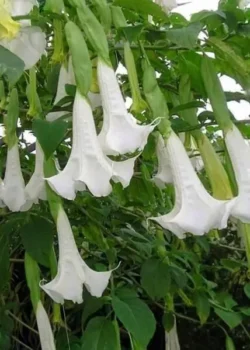
What makes angel’s-tears truly special are its enormous, trumpet-shaped white flowers that hang gracefully from the branches like elegant bells. These blooms are not just beautiful – they’re wonderfully fragrant, releasing their sweet perfume most intensely during evening and nighttime hours. The large, tropical-looking leaves provide an attractive backdrop year-round, creating a lush, exotic appearance that can transform any garden space.
Garden Role and Design Ideas
Angel’s-tears works beautifully as:
- A stunning specimen plant that serves as a focal point
- Part of a fragrance garden designed for evening enjoyment
- A key player in tropical or subtropical landscape themes
- A container plant that can be moved indoors in colder climates
Growing Conditions and Care
This shrub is surprisingly adaptable, though it does have some preferences. Angel’s-tears enjoys full sun to partial shade and thrives in rich, well-draining soil. Interestingly, it has a facultative wetland status, meaning it usually prefers moist conditions but can tolerate drier soils when necessary.
USDA Hardiness Zones: 9-11 (can be grown as an annual or container plant in cooler zones)
Care Tips:
- Provide regular watering, especially during hot, dry periods
- Fertilize during the growing season for best blooming
- Protect from cold temperatures and strong winds
- Prune after flowering to maintain shape and encourage new growth
- In colder climates, grow in containers and bring indoors for winter
Pollinator and Wildlife Benefits
The night-blooming nature of angel’s-tears makes it a valuable resource for nocturnal pollinators, particularly moths. These evening visitors are drawn to the flowers’ intense fragrance and pale color, which shows up beautifully in moonlight.
Should You Plant Angel’s-Tears?
Angel’s-tears can be a wonderful addition to the right garden, particularly if you enjoy evening outdoor activities and appreciate fragrant plants. However, since it’s not native to most of the United States, consider incorporating some native night-blooming alternatives alongside it, such as evening primrose or native honeysuckle species that will better support local wildlife.
If you’re gardening in zones 9-11, angel’s-tears can be a relatively low-maintenance way to add tropical flair and evening fragrance to your landscape. For gardeners in cooler climates, it makes an excellent container plant that can spend summers outdoors and winters in a protected location.
Final Thoughts
Angel’s-tears offers something truly special – the magic of a garden that transforms as the sun goes down. While it may not be native, it can coexist beautifully with native plants in a thoughtfully designed landscape. Just remember to appreciate those evening hours when this remarkable shrub is at its most enchanting, filling your garden with fragrance and attracting fascinating nocturnal visitors.