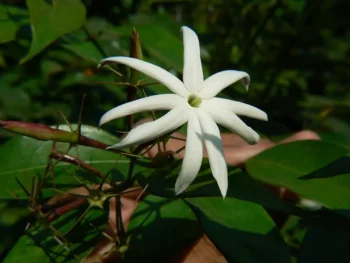
Angelwing Jasmine: A Fragrant Climbing Beauty for Warm Gardens
If you’re looking for a climbing vine that brings both beauty and fragrance to your garden, angelwing jasmine (Jasminum nitidum) might catch your eye. This perennial climber has made itself at home in Florida gardens, though it originally hails from much farther away. Let’s dive into what makes this plant tick and whether it deserves a spot in your landscape.
What Is Angelwing Jasmine?
Angelwing jasmine is a twining, climbing plant that can develop woody or herbaceous stems as it matures. This non-native species has found its way to Florida, where it now reproduces on its own in the wild. While it’s not originally from here, it has established itself as part of the local plant community.
The plant gets its charming common name from its small, star-shaped white flowers that seem to flutter like tiny angel wings when caught by a breeze. These fragrant blooms appear against a backdrop of glossy, dark green leaves that stay attractive year-round.
Where Does It Grow?
Currently, angelwing jasmine grows in Florida within the United States. Originally from the Admiralty Islands in the Papua New Guinea region, this tropical beauty has adapted well to warm, humid climates similar to its native home.
- Species observed
- No observations
The Appeal Factor
What draws gardeners to angelwing jasmine? It’s all about the sensory experience:
- Fragrant white flowers that perfume the evening air
- Glossy, attractive foliage that looks good year-round
- Vigorous climbing habit that quickly covers structures
- Relatively low-maintenance once established
Garden Role and Design Uses
This climbing vine works beautifully in several landscape situations. It’s perfect for covering fences, trellises, arbors, or pergolas where you want both privacy and fragrance. Some gardeners also use it as a sprawling ground cover in areas where it can’t climb upward.
Angelwing jasmine thrives in tropical and subtropical gardens, and it also adapts well to container growing if you want to control its spread or bring it indoors during cooler weather.
Growing Conditions and Care
If you’re in USDA hardiness zones 9-11, you can grow angelwing jasmine outdoors year-round. Here’s what it needs to thrive:
- Light: Full sun to partial shade (at least 6 hours of sunlight daily)
- Soil: Well-draining soil that doesn’t stay soggy
- Water: Regular watering, especially during dry spells
- Support: Sturdy structure for climbing, such as a trellis or fence
Planting and Maintenance Tips
Angelwing jasmine is refreshingly easy to grow once you understand its needs:
- Plant in spring after any frost danger has passed
- Provide immediate support for climbing
- Water regularly until established, then as needed
- Prune regularly to control growth and prevent it from overwhelming other plants
- Watch for its tendency to self-seed and spread
Wildlife and Pollinator Benefits
The fragrant flowers attract butterflies and other pollinators, adding movement and life to your garden. However, since this isn’t a native plant, it may not provide the same level of ecosystem support as indigenous species would.
Things to Consider
Before planting angelwing jasmine, keep in mind that it’s a non-native species that has naturalized in Florida. While it’s not currently listed as invasive, its ability to reproduce and spread on its own means you’ll want to monitor it carefully and prevent unwanted spread to natural areas.
If you’re passionate about supporting native ecosystems, consider these native alternatives that offer similar benefits:
- Carolina jessamine (Gelsemium sempervirens) for fragrant climbing flowers
- Cross vine (Bignonia capreolata) for vigorous climbing habit
- Native honeysuckles like coral honeysuckle (Lonicera sempervirens)
The Bottom Line
Angelwing jasmine can be a lovely addition to warm-climate gardens if you’re looking for a fast-growing, fragrant climber. Just be sure to plant it responsibly, keep an eye on its spread, and consider whether a native alternative might better serve both your garden goals and local wildlife. Whatever you choose, your evening garden walks will be much more fragrant with any of these beautiful climbing options!