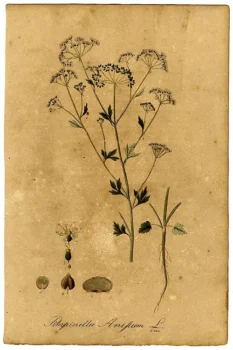
Anise Burnet Saxifrage: A Fragrant Annual for the Herb Garden
If you’ve ever wondered about growing your own licorice-scented spice, anise burnet saxifrage (Pimpinella anisum) might just be the delightfully aromatic annual you’re looking for. This feathery-leafed herb has been charming gardeners and cooks alike for centuries with its distinctive sweet fragrance and culinary versatility.
What Exactly Is Anise Burnet Saxifrage?
Anise burnet saxifrage, also known by its synonym Anisum vulgare, is an annual forb that belongs to the carrot family. As a forb, it’s a non-woody plant that completes its entire life cycle in just one growing season. Don’t let the saxifrage in its common name fool you – this plant is quite different from the rock-loving saxifrages you might know.
This aromatic herb produces delicate, white flowers arranged in characteristic umbrella-like clusters called umbels, typical of plants in the carrot family. The feathery, finely-divided leaves release that unmistakable licorice scent when brushed or crushed.
Where Does It Come From?
Here’s something important to know: anise burnet saxifrage isn’t native to North America. This Mediterranean and Southwest Asian native has naturalized in parts of the United States, specifically in Massachusetts and Michigan, where it now reproduces spontaneously in the wild.
- Species observed
- No observations
As a non-native species that has established itself without human intervention, it’s worth considering native alternatives that could provide similar benefits to your local ecosystem while still meeting your gardening goals.
Why Grow Anise Burnet Saxifrage?
Despite its non-native status, there are several reasons gardeners choose to cultivate this aromatic annual:
- Culinary uses: The seeds are prized for their sweet, licorice-like flavor in baking and cooking
- Pollinator support: The small white umbel flowers attract beneficial insects, including small native bees
- Fragrant foliage: The entire plant releases a pleasant aroma when touched
- Easy to grow: As an annual, it’s straightforward to manage and won’t become a permanent fixture if you change your mind
Garden Design and Landscape Role
Anise burnet saxifrage works beautifully in several garden settings:
- Herb gardens: A classic choice alongside other culinary herbs
- Cottage gardens: Its delicate flowers and fine foliage add textural interest
- Annual borders: Provides mid-season interest with its umbel flowers
- Cut flower gardens: The flowers make lovely additions to small bouquets
Growing Conditions and Care
This Mediterranean native appreciates conditions similar to its homeland:
- Sunlight: Full sun for best growth and seed production
- Soil: Well-drained soil with good drainage; slightly alkaline conditions preferred
- Water: Moderate water needs; avoid overwatering
- Hardiness: Grown as an annual in zones 2-11
Planting and Care Tips
Growing anise burnet saxifrage successfully is quite straightforward:
- Sowing: Direct sow seeds in spring after the last frost date
- Spacing: Thin seedlings to about 6-8 inches apart
- Harvesting: Collect seeds when they turn brown but before they fall
- Self-seeding: The plant readily self-seeds, so expect volunteers next year
A Word About Native Alternatives
While anise burnet saxifrage can be a delightful addition to herb gardens, consider exploring native alternatives that provide similar benefits to pollinators and your local ecosystem. Native plants in the carrot family, such as wild bergamot or native mints, might offer comparable aromatic qualities while supporting local wildlife more effectively.
The Bottom Line
Anise burnet saxifrage offers herb gardeners an easy-to-grow annual with distinctive culinary and aromatic qualities. While it’s not native to North America, its annual nature makes it a manageable choice for those interested in growing their own anise. Just remember to deadhead flowers if you want to prevent self-seeding, or let it naturalize if you enjoy its fragrant presence year after year.
Whether you’re drawn to its culinary potential or simply love the idea of brushing past aromatic foliage in your garden, this Mediterranean transplant can find a happy home in the right garden setting.