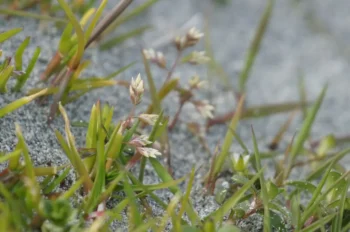
Annual Bluegrass: The Uninvited Guest in Your Garden
If you’ve ever wondered about those patches of bright green grass that seem to pop up everywhere in your lawn and garden beds, you’ve likely encountered annual bluegrass (Poa annua). While the name might sound pleasant enough, this little grass has quite the reputation among gardeners – and not necessarily a good one.
What is Annual Bluegrass?
Annual bluegrass is exactly what its name suggests: a grass that completes its entire life cycle in just one year. This European native has made itself quite at home across North America, establishing populations from Alaska to Hawaii and everywhere in between. You’ll find it thriving in all Canadian provinces, every U.S. state, and even in territories like Puerto Rico and Guam.
- Species observed
- No observations
This adaptable little grass grows as a bunch-type formation, reaching a modest height of about 0.3 feet (roughly 4 inches) with fine-textured green foliage. Its growth form is described as decumbent, meaning it tends to spread along the ground rather than growing strictly upright.
Why You Probably Don’t Want to Plant It
Here’s where things get interesting – annual bluegrass isn’t typically something you’d want to intentionally add to your garden. In fact, it’s considered a restricted noxious weed in Alaska, and many gardeners across North America consider it more of a persistent visitor than a welcome guest.
The grass has several characteristics that make it challenging:
- Rapid growth rate with high seedling vigor
- Produces an enormous amount of seeds (nearly 1.2 million seeds per pound!)
- Seeds spread quickly and germinate readily
- Tends to create patchy, uneven appearances in lawns
- Can outcompete desired grass species
Where Annual Bluegrass Thrives
One reason this grass is so successful is its remarkable adaptability. Annual bluegrass can handle:
- USDA hardiness zones 3-11
- Various soil types from coarse to fine textures
- pH levels ranging from 4.8 to 8.0
- Both wetland and upland conditions (though it usually prefers drier sites)
- Intermediate shade tolerance
- Moderate drought conditions
It’s particularly fond of disturbed areas, compacted soils, and spots where other grasses struggle – which explains why it often appears in walkways, garden paths, and thin areas of lawns.
Seasonal Behavior
Annual bluegrass is most active during spring, when it produces small, inconspicuous yellow flowers. The seeds ripen from spring through summer, ensuring the next generation is ready to go. Because it’s an annual, individual plants die off after setting seed, but with such prolific seed production, new plants are never far behind.
Management Rather Than Cultivation
Since this isn’t a plant most gardeners want to encourage, the focus is usually on management rather than cultivation. If you’re dealing with annual bluegrass in your landscape:
- Hand-pull young plants before they set seed
- Maintain healthy, dense turf to prevent establishment
- Improve soil conditions and reduce compaction
- Consider overseeding thin areas with desirable native grasses
Native Alternatives to Consider
Instead of dealing with annual bluegrass, consider these native alternatives that provide better ecological value:
- Buffalo grass (Bouteloua dactyloides) for drought-tolerant areas
- Little bluestem (Schizachyrium scoparium) for ornamental grass gardens
- Regional native sedges for wet or shaded areas
- Local native bunch grasses appropriate for your region
The Bottom Line
While annual bluegrass certainly deserves credit for its tenacity and adaptability, it’s not a plant most gardeners need to actively encourage. Its rapid spread, prolific seeding, and tendency to create patchy appearances make it more of a management challenge than a garden asset. Focus your energy instead on establishing native grasses and groundcovers that will provide better long-term value for both your landscape and local wildlife.
Remember, the best defense against unwanted annual bluegrass is a healthy, well-maintained garden ecosystem where desirable plants can thrive and naturally crowd out less welcome visitors.