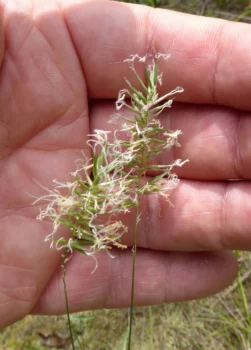
Annual Vernalgrass: A European Grass That’s Made Itself at Home
If you’ve ever wandered through a meadow or disturbed area and noticed a delicate, sweet-scented grass swaying in the breeze, you might have encountered annual vernalgrass (Anthoxanthum aristatum). This unassuming little grass has quite the story – it’s traveled far from its European homeland to establish itself across much of North America.
What Exactly Is Annual Vernalgrass?
Annual vernalgrass is exactly what its name suggests – an annual grass that completes its entire life cycle in one growing season. Don’t let the simple description fool you though; this grass has some interesting characteristics that set it apart from your typical lawn grass. When crushed or mowed, it releases a sweet, hay-like fragrance that’s quite pleasant and distinctive.
You might also see this plant referenced by its botanical synonyms, including Anthoxanthum puelii or various forms of Anthoxanthum odoratum varieties, but they’re all referring to the same charming little grass.
Where You’ll Find It Growing
Originally native to Europe and North Africa, annual vernalgrass has made itself quite comfortable across North America. You can find it growing wild in an impressive range of locations, from Alabama to British Columbia, and everywhere from California to Maine. It’s established populations in Alabama, Arkansas, British Columbia, California, Florida, Illinois, Iowa, Kentucky, Louisiana, Maine, Massachusetts, Michigan, Minnesota, Mississippi, New Hampshire, New Jersey, New York, North Carolina, Ohio, Oklahoma, Oregon, Pennsylvania, Quebec, South Carolina, Tennessee, Texas, Virginia, Washington, and West Virginia.
- Species observed
- No observations
Should You Plant Annual Vernalgrass in Your Garden?
Here’s where things get interesting. Annual vernalgrass isn’t native to North America, but it’s been naturalized here for so long that it’s become part of many ecosystems. As a responsible gardener, you’ll want to weigh the pros and cons before adding it to your landscape.
The Case for Annual Vernalgrass
- Extremely low maintenance – it’s an annual that self-seeds
- Drought tolerant once established
- Pleasant fragrance when cut or disturbed
- Tolerates poor soils where other plants might struggle
- Useful for naturalizing disturbed areas
Things to Consider
- As a non-native species, it doesn’t provide the same ecological benefits as native grasses
- Can self-seed aggressively and spread beyond where you want it
- Not particularly showy or ornamental
- May compete with native plant species
Better Native Alternatives
If you’re looking for native grasses that offer similar benefits, consider exploring indigenous species in your area. Native bunch grasses, sedges, or other regional grasses will provide better wildlife habitat and support local ecosystems while still giving you that naturalized meadow look.
How to Grow Annual Vernalgrass (If You Choose To)
Should you decide to include annual vernalgrass in your landscape, the good news is that it’s remarkably easy to grow. This grass thrives in USDA hardiness zones 3-9, making it suitable for most of North America.
Growing Conditions
- Light: Full sun is preferred, though it tolerates partial shade
- Soil: Not picky at all – tolerates poor, sandy, or clay soils
- Water: Drought tolerant once established, but appreciates occasional watering during dry spells
- pH: Adaptable to various soil pH levels
Planting and Care Tips
Annual vernalgrass is so adaptable that it almost grows itself. Simply scatter seeds in early spring or fall, and nature will take care of the rest. The seeds are tiny, so a light rake over the soil after broadcasting will help with germination.
Since it’s an annual, you don’t need to worry about dividing or transplanting. The plant will flower, set seed, and die back naturally, with new plants emerging the following season from self-sown seeds. This self-seeding habit means you might want to deadhead the flowers if you want to prevent spread to other areas of your garden.
The Bottom Line
Annual vernalgrass is a hardy, low-maintenance option for gardeners looking to naturalize disturbed areas or create informal meadow spaces. However, as conscientious gardeners, we should always consider the ecological impact of our choices. While this grass isn’t considered invasive, planting native alternatives will better support local wildlife and ecosystem health.
If you do choose to grow annual vernalgrass, monitor its spread and consider it a temporary solution while you establish more beneficial native plantings. After all, the best gardens are those that work in harmony with their local environment!