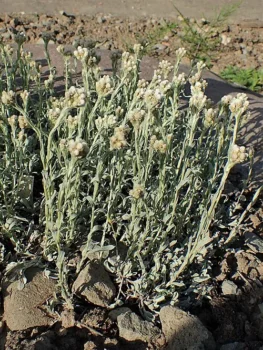
Antennaria chilensis: A Little-Known Member of the Pussytoes Family
If you’ve stumbled across the name Antennaria chilensis in your plant research, you’ve discovered one of the more mysterious members of the Antennaria genus. While its cousins in the pussytoes family are well-documented garden favorites, this particular species remains something of an enigma in the gardening world.
What We Know (And Don’t Know) About This Plant
Antennaria chilensis belongs to the Antennaria genus, commonly known as pussytoes or everlasting flowers. The species name chilensis suggests a connection to Chile or the broader Chilean region of South America, though specific distribution information is surprisingly scarce in readily available sources.
This plant has been given the botanical synonym Antennaria magellanica Sch. Bip., which provides another clue about its potential geographic origins, possibly linking it to the Magellan region of southern South America.
The Challenge of Growing Antennaria chilensis
Here’s where things get tricky for the eager gardener: reliable information about Antennaria chilensis is remarkably hard to come by. Unlike its better-known relatives in the pussytoes family, this species doesn’t appear in most standard gardening references or native plant databases.
What This Means for Your Garden
Before considering adding Antennaria chilensis to your landscape, there are several important factors to consider:
- Identification challenges: Without clear documentation, ensuring you have the correct species can be difficult
- Growing requirements unknown: Specific care instructions, hardiness zones, and optimal growing conditions aren’t well-documented
- Availability concerns: Limited information suggests limited commercial availability
- Conservation considerations: If this is indeed a rare species, responsible sourcing becomes crucial
Alternative Suggestions
If you’re drawn to the Antennaria genus, consider these better-documented alternatives that offer similar charm:
- Antennaria dioica: A well-known species with reliable growing information
- Regional native Antennaria species: Check with local native plant societies for species native to your specific area
- Other low-growing native perennials: Many regions have excellent alternatives that provide similar garden benefits
The Bottom Line
While Antennaria chilensis intrigues with its mysterious nature, the lack of reliable growing information makes it a challenging choice for most gardeners. If you’re determined to learn more about this species, your best bet is to connect with botanical institutions, native plant societies in South American regions, or specialized research facilities that might have more detailed information.
For most gardening purposes, exploring well-documented native alternatives in the Antennaria genus will give you better results and contribute more meaningfully to local ecosystem support. Sometimes the most responsible gardening choice is recognizing when we need more information before we plant!