Apple of Peru: A Quirky South American Annual Worth Knowing
Meet Nicandra physalodes, better known as apple of Peru – a charming annual that’s been quietly making itself at home in gardens across North America. While it might not be a native plant, this South American wanderer has some genuinely appealing qualities that make it worth considering for your garden space.
What Exactly Is Apple of Peru?
Apple of Peru (Nicandra physalodes) is an annual forb – essentially a non-woody plant that completes its entire life cycle in one growing season. Originally hailing from Peru and surrounding South American regions, this plant has naturalized widely across the United States and Canada, establishing itself in environments ranging from Alabama to Alaska’s neighboring provinces.
You might also encounter this plant under its former scientific names, including Atropa physalodes or Physalodes physalodes, though these synonyms are less commonly used today.
Where You’ll Find It Growing
Apple of Peru has spread far beyond its South American origins and now grows wild across an impressive range of North American locations. You can find it established in states from coast to coast, including Alabama, Arkansas, California, Colorado, Connecticut, Delaware, Florida, Georgia, Hawaii, Idaho, Illinois, Indiana, Iowa, Kansas, Kentucky, Maine, Maryland, Massachusetts, Michigan, Minnesota, Mississippi, Missouri, Nebraska, New Hampshire, New Jersey, New York, North Carolina, Ohio, Oklahoma, Pennsylvania, Rhode Island, South Carolina, Tennessee, Vermont, Virginia, Washington, West Virginia, and Wisconsin. It’s also found in several Canadian provinces including Nova Scotia, Ontario, Prince Edward Island, and Quebec.
- Species observed
- No observations
The Garden Appeal
What makes apple of Peru interesting in the garden? Several things, actually:
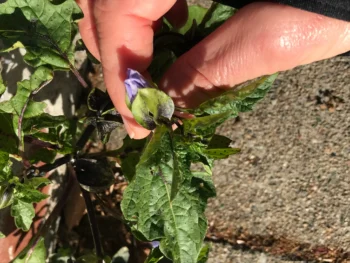
- Distinctive blue-purple flowers with white centers that bloom throughout summer
- Fascinating inflated seed pods that look like tiny paper lanterns
- Bushy growth habit that fills space nicely
- Attracts pollinators, particularly bees
- Extremely easy to grow with minimal care requirements
The plant works well as a background filler in cottage gardens, informal landscapes, or cutting gardens where its unique seed pods can be harvested for dried arrangements.
Growing Conditions and Care
Apple of Peru is refreshingly uncomplicated to grow. It thrives in full sun and well-drained soil but isn’t particularly fussy about soil quality – it actually tolerates poor soils quite well. As an annual, it can be grown in USDA hardiness zones 3-11.
For planting and care:
- Direct sow seeds in spring after the last frost
- Choose a sunny location with decent drainage
- Water regularly during establishment, then it becomes quite drought tolerant
- Minimal fertilization needed – too much can reduce flowering
- Deadhead spent flowers to encourage continued blooming, or leave them to develop seed pods
One thing to note: apple of Peru self-seeds readily, so you may find volunteer plants appearing in subsequent years.
Should You Grow It?
While apple of Peru isn’t native to North America, it’s not considered invasive or noxious either. It occupies a middle ground – a naturalized plant that can add interest to gardens without causing ecological harm. However, as native plant enthusiasts, we always encourage considering native alternatives first.
If you’re drawn to apple of Peru’s unique flowers and seed pods, you might also consider native alternatives like:
- Ground cherry species (Physalis) for similar inflated seed pods
- Wild bergamot (Monarda) for pollinator-friendly purple flowers
- Native asters for late-season blue-purple blooms
The Bottom Line
Apple of Peru is one of those plants that falls into the interesting but not essential category. It’s easy to grow, has unique visual appeal, and won’t take over your garden or local ecosystem. If you enjoy trying unusual annuals and appreciate plants with both attractive flowers and distinctive seed pods, apple of Peru might earn a spot in your garden. Just remember to explore native options first – your local pollinators and ecosystem will thank you for it.
Whether you choose to grow it or not, apple of Peru serves as a good reminder that gardens can be places of discovery, where we learn about plants from around the world while still prioritizing our native flora.