Arborescent Angel’s-Tears: A Night-Blooming Beauty for Your Garden
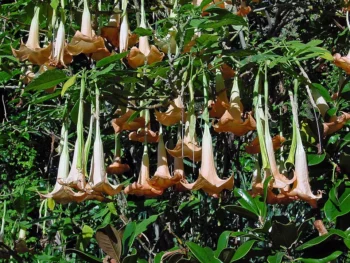
If you’re drawn to dramatic, fragrant flowers that put on their show after sunset, arborescent angel’s-tears (Brugmansia versicolor) might catch your attention. This striking perennial shrub brings an exotic flair to gardens with its large, trumpet-shaped blooms that seem to glow in the moonlight.
What Is Arborescent Angel’s-Tears?
Arborescent angel’s-tears is a multi-stemmed woody shrub that typically grows 13 to 16 feet tall, though it can occasionally reach greater heights under ideal conditions. Despite its enchanting name and beautiful flowers, this plant is not native to North America. Originally from the cloud forests of Ecuador and northern Peru, it has established itself in some parts of the southeastern United States, particularly in Georgia, where it now reproduces on its own in the wild.
Geographic Distribution and Habitat
In the United States, Brugmansia versicolor has been documented growing in Georgia. As a non-native species, it has adapted to local conditions and can persist without human intervention. The plant shows different wetland preferences depending on the region—in coastal areas, it’s typically found in upland sites, while in mountainous and piedmont regions, it may occasionally appear in wetland areas.
- Species observed
- No observations
The Evening Garden Star
What makes arborescent angel’s-tears truly special is its nighttime performance. The large, pendulous trumpet-shaped flowers—typically white or cream-colored—open in the evening, releasing an intoxicating fragrance that can fill an entire garden. These blooms are specifically designed to attract nocturnal pollinators like moths, making your garden a hub of nighttime activity.
Growing Conditions and Care
If you’re considering adding this plant to your landscape, here’s what you need to know:
- Climate: Hardy in USDA zones 9-11; can be grown as an annual or container plant in cooler regions
- Light: Partial shade to full sun
- Soil: Rich, well-draining soil with good organic content
- Water: Regular watering; prefers consistent moisture but not waterlogged conditions
- Humidity: Thrives in warm, humid environments
Planting and Care Tips
Success with arborescent angel’s-tears comes down to mimicking its native cloud forest environment:
- Plant in spring after the last frost in zones 9-11
- In cooler climates, grow in large containers that can be moved indoors during winter
- Feed regularly during the growing season with a balanced fertilizer
- Provide protection from strong winds, which can damage the large leaves and flowers
- Prune lightly in late winter to maintain shape and size
Garden Design and Landscape Role
Arborescent angel’s-tears works best as a specimen plant or focal point in the landscape. Its substantial size and dramatic evening display make it perfect for:
- Evening gardens and moonlight garden designs
- Tropical and subtropical landscape themes
- Container gardens on patios and decks
- Background plantings where its height can be appreciated
Wildlife and Pollinator Benefits
The night-blooming flowers of arborescent angel’s-tears provide nectar for nocturnal pollinators, particularly moths. This can add an interesting dimension to your garden’s ecosystem, supporting nighttime wildlife activity that you might not otherwise notice.
Should You Plant It?
While arborescent angel’s-tears isn’t invasive, it’s worth considering native alternatives that provide similar benefits to your local ecosystem. For evening fragrance and night-blooming beauty, consider native options like evening primrose (Oenothera species) or native honeysuckles (Lonicera species) that support local wildlife more effectively.
If you do choose to grow arborescent angel’s-tears, it can be a stunning addition to the right garden setting. Just remember that all parts of Brugmansia plants contain toxic compounds, so plant them away from areas where children and pets play.
Whether you choose this exotic beauty or opt for native alternatives, night-blooming plants add a magical quality to any garden, transforming your outdoor space into an evening sanctuary filled with fragrance and mystery.