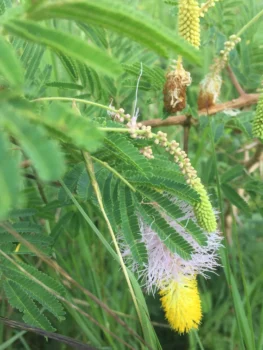
Aroma Plant: A Fragrant Shrub with Unique Bi-Colored Blooms
Meet the aroma plant (Dichrostachys cinerea), a fascinating shrub that’s making waves in Florida gardens with its distinctive fragrant flowers and hardy nature. While this isn’t a native Florida species, it has certainly made itself at home in the Sunshine State, bringing a touch of exotic beauty to landscapes willing to embrace something a little different.
What Makes the Aroma Plant Special?
The aroma plant gets its common name from its delightfully fragrant flowers, which appear in eye-catching spherical clusters. What really sets these blooms apart is their unique bi-colored appearance – each flower head displays both bright yellow and deep red sections, creating a striking visual contrast that’s hard to ignore. The feathery, compound leaves add an elegant texture to the landscape, while the thorny branches provide natural structure and can serve as an effective barrier.
Native Status and Distribution
Originally hailing from Africa and Madagascar, the aroma plant is considered a non-native species in the United States. It has established itself in Florida, where it reproduces naturally without human intervention. While it’s not currently listed as invasive in available databases, it’s always wise to monitor any non-native species for aggressive spreading behavior.
- Species observed
- No observations
Should You Plant Aroma in Your Garden?
The decision to plant aroma depends on your specific gardening goals and philosophy. Here are some considerations:
Reasons You Might Love It:
- Stunning fragrant flowers that attract pollinators like bees and butterflies
- Extremely drought tolerant once established
- Low maintenance requirements
- Unique bi-colored blooms provide year-round interest
- Thorny branches can serve as natural security barriers
Potential Drawbacks:
- Sharp thorns can be hazardous around walkways and play areas
- Non-native status means it may not support local ecosystems as effectively as native plants
- Self-seeding nature requires monitoring to prevent unwanted spread
Growing Conditions and Care
If you decide to give aroma a try, you’ll find it’s refreshingly easy to please. This tough little shrub thrives in USDA hardiness zones 9b through 11, making it well-suited to Florida’s climate.
Ideal Growing Conditions:
- Sunlight: Full sun for best flowering
- Soil: Tolerates poor soils and various soil types
- Water: Drought tolerant once established; avoid overwatering
- Space: Allow 4-6 feet between plants as mature specimens can reach 13-16 feet in height
Planting and Care Tips
Getting started with aroma is straightforward, but a few tips will help ensure success:
- Plant in spring after the last frost for best establishment
- Water regularly during the first growing season to help roots establish
- Prune carefully due to thorns – wear thick gloves and long sleeves
- Monitor for self-seeding and remove unwanted seedlings promptly
- Fertilize sparingly; this plant actually prefers lean soils
Landscape Design Ideas
Aroma works well in several landscape settings. Consider using it as a specimen plant where its unique flowers can be appreciated, or plant it as part of a wildlife-friendly garden where its pollinator-attracting blooms will be welcomed. The thorny nature makes it excellent for security hedging, though be mindful of placement near foot traffic areas.
Native Alternatives to Consider
If you prefer to stick with native Florida plants, consider these alternatives that offer similar benefits:
- Beautyberry (Callicarpa americana) for wildlife attraction
- Firebush (Hamelia patens) for butterfly-friendly blooms
- Wild lime (Zanthoxylum fagara) for thorny barrier hedging
The Bottom Line
The aroma plant offers unique beauty and low-maintenance appeal for Florida gardeners willing to work with non-native species. Its fragrant, bi-colored flowers and drought tolerance make it an interesting addition to the right landscape. Just remember to monitor its spread and consider native alternatives that might provide similar benefits while supporting local ecosystems. Whatever you choose, happy gardening!