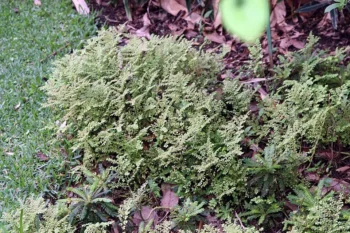
Artillery Plant (Pilea trianthemoides): A Small but Spirited Annual
Meet the artillery plant, a tiny but fascinating annual that’s made its home in Florida’s warm climate. While you might not have heard of Pilea trianthemoides by name, this diminutive plant has quietly established itself as part of the state’s naturalized flora. But should you consider adding it to your garden? Let’s explore what makes this little plant tick.
What Exactly Is Artillery Plant?
Artillery plant is a non-native annual forb that belongs to the nettle family. Don’t worry – unlike its stinging relatives, this little guy won’t leave you with welts! As a forb, it’s essentially a soft-stemmed plant without any woody tissue, making it tender and delicate in appearance. The name artillery plant comes from its explosive seed dispersal mechanism, though this particular species is more subtle than its showier cousins.
Where Does It Call Home?
Originally from tropical regions, Pilea trianthemoides has found a comfortable niche in Florida, where it reproduces on its own without human intervention. It’s currently the only state where this species has been documented as establishing wild populations.
- Species observed
- No observations
The Garden Verdict: To Plant or Not to Plant?
Here’s where things get a bit tricky. While artillery plant isn’t currently listed as invasive or noxious, its status as a non-native species that readily self-seeds gives us pause. Since detailed information about its ecological impact is limited, the responsible approach is to consider native alternatives first.
If you’re drawn to small, delicate foliage plants, Florida has wonderful native options like:
- Native violets (Viola species)
- Partridge pea (Chamaecrista fasciculata)
- Wild petunia (Ruellia caroliniensis)
Growing Artillery Plant Successfully
Should you decide to grow Pilea trianthemoides, here’s what you need to know. As an annual, it completes its entire life cycle in one growing season, so you’ll need to replant or allow it to self-seed each year.
Preferred Growing Conditions
Based on its Florida habitat and tropical origins, artillery plant likely prefers:
- Warm temperatures (USDA zones 9-11)
- Partial shade to filtered sunlight
- Consistently moist but well-draining soil
- High humidity levels
Care and Maintenance Tips
Artillery plant is relatively low-maintenance once established:
- Water regularly to keep soil evenly moist
- Provide protection from harsh afternoon sun
- No fertilization needed – it’s quite content in average soils
- Monitor for self-seeding if you want to control its spread
Landscape Role and Design Ideas
This small-statured plant works well as:
- A delicate ground cover in shaded areas
- An addition to container gardens
- Part of a tropical plant collection
- A curiosity plant for plant enthusiasts
The Bottom Line
Artillery plant is an interesting botanical specimen with limited garden presence. While it’s not necessarily harmful, its non-native status and our incomplete understanding of its ecological relationships suggest that native plants might be better choices for Florida gardens. If you do choose to grow it, consider it more of a novelty plant and keep an eye on its spreading tendencies.
Remember, the best gardens support local ecosystems while bringing joy to gardeners. Whether you choose artillery plant or one of Florida’s native beauties, happy gardening!