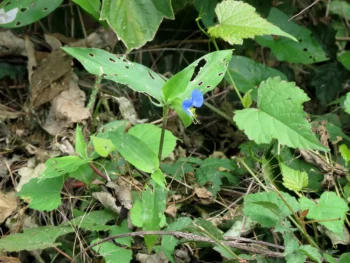
Asiatic Dayflower: A Non-Native Ground Cover with Charming Blue Blooms
The Asiatic dayflower (Commelina communis) is one of those plants that tends to show up uninvited in gardens across North America, yet many gardeners find themselves oddly charmed by its delicate blue flowers and heart-shaped leaves. This annual forb has traveled far from its native East Asian home to establish itself throughout much of the United States and parts of Canada.
Getting to Know the Asiatic Dayflower
Also known by its botanical name Commelina communis, this non-native species has made quite the journey from its original range in China, Japan, and Korea. It’s classified as a forb—essentially a non-woody plant that lacks significant woody tissue above ground. What makes it particularly interesting is its unique flower structure: each bloom features two prominent blue petals and one smaller, often white petal, creating an asymmetrical but appealing display.
Where You’ll Find It Growing
This adaptable plant has established populations across an impressive range of North American locations, including Alabama, Arkansas, Connecticut, Delaware, Florida, Georgia, Illinois, Indiana, Iowa, Kansas, Kentucky, Louisiana, Maine, Maryland, Massachusetts, Michigan, Minnesota, Mississippi, Missouri, Nebraska, New Hampshire, New Jersey, New York, North Carolina, North Dakota, Ohio, Oklahoma, Oregon, Pennsylvania, Rhode Island, South Carolina, South Dakota, Tennessee, Texas, Vermont, Virginia, Washington, West Virginia, Wisconsin, plus Ontario and Quebec in Canada.
- Species observed
- No observations
The Garden Appeal
There’s something undeniably charming about the Asiatic dayflower’s morning display. The small blue flowers typically open in the early hours and close by afternoon, giving it the dayflower name. The plant forms a low-growing, spreading mat with attractive heart-shaped leaves that create decent ground cover in shadier spots of the garden.
Its role in landscape design is primarily as an informal ground cover or naturalized plant. It works well in:
- Shaded garden areas where other plants struggle
- Naturalized or wild garden settings
- Areas with consistent moisture
- Informal cottage-style gardens
Growing Conditions and Care
The Asiatic dayflower is remarkably adaptable when it comes to growing conditions. It thrives in partial to full shade and prefers moist to average soil conditions, though it can tolerate various soil types. As an annual, it completes its entire life cycle in one growing season and can grow in USDA hardiness zones 3-10.
One of the plant’s most notable characteristics is its wetland status—it’s classified as facultative across most regions, meaning it can grow in both wetland and non-wetland conditions. This adaptability partly explains its widespread distribution.
Planting and Maintenance Tips
If you’re considering adding Asiatic dayflower to your garden, here are some key points to keep in mind:
- It self-seeds readily, so expect it to return year after year
- Requires minimal care once established
- May spread more aggressively than desired
- Best planted in areas where spreading is acceptable or can be managed
- Thrives with consistent moisture but tolerates some drought
Wildlife and Pollinator Benefits
Despite being non-native, the Asiatic dayflower does provide some ecological value. According to research, it can make up 10-25% of the diet for large animals and provides occasional cover. Terrestrial birds use it for 5-10% of their diet, though less frequently for cover. The morning flowers attract small pollinators including bees and flies, offering nectar during their brief blooming window.
Should You Plant It?
This is where things get a bit nuanced. While the Asiatic dayflower isn’t currently listed as invasive or noxious in most areas, its non-native status and tendency to self-seed aggressively mean it’s worth considering carefully. If you’re drawn to its blue blooms and ground-covering habit, you might want to explore native alternatives first.
Consider these native options that offer similar benefits:
- Wild ginger (Asarum canadense) for shaded ground cover
- Virginia bluebells (Mertensia pulmonarioides) for blue spring flowers
- Wild columbine (Aquilegia canadensis) for delicate, unique blooms
If you do choose to grow Asiatic dayflower, be prepared to manage its spread and consider it more of a naturalized addition than a formal garden plant. Its adaptability and low maintenance requirements can be assets, but its enthusiastic self-seeding habit means it’s not for gardeners who prefer tight control over their plant placements.
Ultimately, the Asiatic dayflower represents one of those garden decisions that depends on your gardening style and priorities. While it offers charming blooms and easy care, supporting native plants that evolved alongside local wildlife is generally the more ecologically beneficial choice.