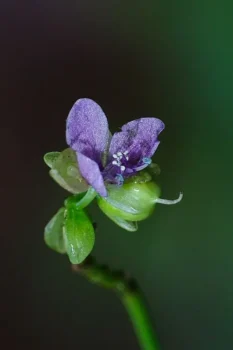
Asiatic Dewflower: A Delicate Water-Loving Visitor to American Gardens
Meet the Asiatic dewflower (Murdannia spirata), a charming little plant that’s quietly made itself at home in Florida’s warm, humid climate. This delicate annual or perennial forb might not be a household name, but it’s got some interesting qualities that make it worth knowing about—whether you’re considering adding it to your garden or you’ve stumbled upon it growing wild.
What Exactly Is Asiatic Dewflower?
The Asiatic dewflower is a non-woody plant that belongs to the same family as spiderworts and dayflowers. You might also see it listed under its old scientific names, Aneilema spiratum or Commelina spirata, if you’re diving into botanical references. This little plant has a somewhat nomadic nature—it can behave as either an annual or perennial depending on conditions, which gives it a flexibility that many gardeners can appreciate.
As a forb, it lacks significant woody tissue and keeps its growing points at or below ground level, making it well-adapted to surviving in areas where other plants might struggle with seasonal changes.
Where You’ll Find It Growing
Originally from tropical and subtropical regions of Asia—including India, Southeast Asia, and southern China—this plant has established itself as a naturalized resident in Florida. It reproduces on its own without human assistance and has proven quite capable of persisting in the wild.
- Species observed
- No observations
The Garden Appeal (Or Lack Thereof)
Let’s be honest: Asiatic dewflower isn’t going to win any showstopper of the year awards. Its small, three-petaled purple-blue flowers are delicate and pretty in a understated way, complemented by slender, grass-like foliage. Think of it as the quiet, thoughtful friend in a group of flashy garden celebrities.
The plant works best as a ground cover in naturalized areas or as a subtle addition to moisture-loving borders. It’s particularly suited for:
- Bog gardens and water features
- Rain gardens and low-lying areas
- Naturalized landscapes where a wild look is desired
- Areas with consistent moisture that challenge other plants
Growing Conditions and Care
If you’re in USDA hardiness zones 9-11 and thinking about growing Asiatic dewflower, here’s what it needs to thrive:
Moisture is key: This plant loves consistently moist to wet soils—it’s even classified as facultative for wetlands, meaning it’s equally happy in soggy conditions or regular garden soil as long as it doesn’t dry out completely.
Light requirements: Partial shade to full sun works well, though it tends to prefer some protection from intense afternoon sun in hotter climates.
Soil preferences: Organic-rich, well-draining soil that retains moisture is ideal. Think of the kind of soil you’d find at the edge of a pond or stream.
Temperature needs: Being frost-tender, it won’t survive freezing temperatures, which explains its limited range in the United States.
Planting and Maintenance Tips
Asiatic dewflower is relatively low-maintenance once established:
- Plant in spring after the last frost danger has passed
- Keep soil consistently moist—never let it completely dry out
- Mulch around plants to help retain moisture
- Be prepared for it to spread via stolons (underground stems) if conditions are favorable
- In areas where it’s perennial, it may die back in winter and return in spring
Wildlife and Pollinator Benefits
While not extensively studied, the small flowers do attract minor pollinators like small bees and flies. The plant provides some habitat value in wetland margins, though it’s not considered a significant wildlife food source.
Should You Plant It?
Here’s the thing about Asiatic dewflower: it’s not native to North America, but it also doesn’t appear to be aggressively invasive. If you’re drawn to its subtle charm and have the right growing conditions, there’s no major environmental reason to avoid it. However, if you’re committed to native gardening (and we’d encourage that!), consider these native alternatives instead:
- Virginia spiderwort (Tradescantia virginiana) for similar delicate flowers
- Native sedges like Carex species for moisture-loving grass-like foliage
- Blue flag iris (Iris versicolor) for wet areas with more dramatic blooms
- Pickerelweed (Pontederia cordata) for bog gardens and water features
The bottom line? Asiatic dewflower is a perfectly pleasant plant that won’t cause problems, but it’s not going to solve any either. If you’ve got a wet spot that needs something understated and you can’t find the perfect native alternative, it’s an acceptable choice. Just remember that every garden spot could potentially house a native plant that supports local wildlife in ways that non-natives simply can’t match.