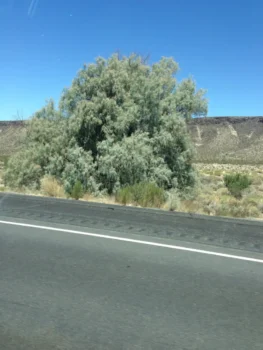
Athel Tamarisk: A Controversial Desert Survivor
If you’ve ever driven through the southwestern United States and noticed those wispy, blue-green trees dotting the desert landscape, chances are you’ve spotted an Athel tamarisk (Tamarix aphylla). This hardy perennial shrub has quite the reputation – both as a drought-busting survivor and as a plant that stirs up considerable debate among gardeners and land managers alike.
What Exactly Is Athel Tamarisk?
Athel tamarisk goes by the botanical name Tamarix aphylla, and you might also see it listed under its synonym Tamarix articulata. This multi-stemmed woody perennial typically grows as a shrub, usually staying under 13-16 feet tall, though it can sometimes stretch taller or develop a more tree-like form depending on growing conditions.
What makes this plant instantly recognizable is its delicate, feathery foliage that ranges from blue-green to gray-green in color. The tiny, scale-like leaves create an almost ethereal texture that sways gracefully in the breeze. During blooming season, the plant produces clusters of small pink to white flowers that attract bees and other pollinators.
Where Does It Come From and Where Does It Grow Now?
Here’s where things get interesting – and a bit complicated. Athel tamarisk isn’t native to North America at all. Originally from North Africa, the Middle East, and parts of Asia, this plant was introduced to the United States and has since made itself quite at home. It now grows wild across Arizona, California, Nevada, Texas, Utah, and Puerto Rico, reproducing on its own without any human help.
- Species observed
- No observations
The Wetland Flexibility Factor
One of the most fascinating aspects of Athel tamarisk is its relationship with water. Depending on where you are in the country, this plant shows different preferences:
- In the Arid West and Western Mountains regions: It can thrive in both wetlands and dry areas
- In the Atlantic and Gulf Coastal Plain, Caribbean, and Great Plains: It usually prefers wetland areas but can adapt to drier spots
- In Hawaii: It typically grows in non-wetland areas but can tolerate some moisture
The Gardener’s Dilemma: To Plant or Not to Plant?
This is where Athel tamarisk becomes controversial. While this plant is undeniably tough as nails and can solve certain landscaping challenges, its non-native status and aggressive spreading habits raise important questions.
The Good: If you’re dealing with extremely harsh conditions – think blazing sun, poor soil, salt spray, or drought – Athel tamarisk laughs in the face of adversity. It’s practically indestructible once established and can serve as an effective windbreak, erosion control, or privacy screen.
The Concerning: This plant’s superpower of survival can become problematic. In many areas, particularly in the western United States, Athel tamarisk has earned a reputation for spreading aggressively and potentially displacing native vegetation.
Growing Conditions and Care
If you’re in USDA hardiness zones 7-11 and considering this plant despite the concerns, here’s what you need to know:
- Sun: Full sun is best, though it can tolerate some shade
- Soil: Extremely adaptable – from poor, rocky soil to clay
- Water: Drought tolerant once established, but appreciates deep watering during establishment
- Salt tolerance: Excellent, making it suitable for coastal areas
- Maintenance: Minimal pruning needed, but keep an eye on spreading
Better Native Alternatives to Consider
Before planting Athel tamarisk, consider these native alternatives that can provide similar benefits without the ecological concerns:
- Desert Willow (Chilopsis linearis): Offers similar wispy texture with beautiful orchid-like flowers
- Fourwing Saltbush (Atriplex canescens): Excellent salt and drought tolerance
- Jojoba (Simmondsia chinensis): Tough desert shrub with attractive form
- Brittlebush (Encelia farinosa): Cheerful yellow flowers and silver foliage
The Bottom Line
Athel tamarisk is undeniably a survivor that can thrive where other plants fear to tread. However, its aggressive nature and non-native status make it a questionable choice for responsible gardening. If you’re drawn to its drought tolerance and airy texture, consider exploring native alternatives that can provide similar benefits while supporting local ecosystems.
Remember, gardening isn’t just about what survives – it’s about creating landscapes that work harmoniously with the natural world around us. Sometimes the toughest choice is saying no to the toughest plant!