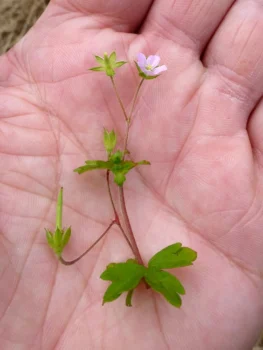
Australasian Geranium: What We Know About This Lesser-Known Geranium
If you’ve stumbled across the name Australasian geranium (Geranium homeanum) in your plant research, you might be scratching your head trying to find detailed information about this particular species. You’re not alone! This geranium is somewhat of a mystery plant in the gardening world, with limited documentation about its horticultural characteristics and growing requirements.
What Is Australasian Geranium?
Geranium homeanum, commonly known as Australasian geranium, is a perennial herbaceous plant belonging to the true geranium family. As a forb, it lacks significant woody tissue and maintains its growing points at or below ground level, allowing it to return year after year.
This species has been classified with several synonyms over the years, including Geranium carolinianum var. australe and Geranium glabratum, which speaks to some taxonomic confusion that may explain why detailed growing information is scarce.
Where Does It Grow?
Australasian geranium is considered a non-native species that has established itself in parts of the United States, specifically documented in California and Hawaii. It reproduces on its own in the wild and tends to persist in these locations without human intervention.
- Species observed
- No observations
Should You Grow Australasian Geranium?
Here’s where things get tricky. While this geranium isn’t documented as invasive or noxious, the lack of detailed horticultural information makes it a challenging choice for home gardeners. We simply don’t have reliable data about:
- Specific growing conditions it prefers
- How large it gets or how fast it grows
- What pollinators or wildlife it might support
- Appropriate care and maintenance requirements
- Which USDA hardiness zones it tolerates
Better Native Alternatives
Instead of taking a gamble on this poorly documented species, consider these well-researched native geraniums that will provide reliable beauty and ecological benefits:
- Wild Geranium (Geranium maculatum) – A gorgeous native with pink to purple flowers
- Spotted Geranium (Geranium carolinianum) – A delicate native annual with small pink flowers
- Richardson’s Geranium (Geranium richardsonii) – A western native with white to pale pink blooms
These native alternatives come with the added benefits of supporting local ecosystems, attracting native pollinators, and having well-documented growing requirements that make garden success much more likely.
The Bottom Line
While Australasian geranium isn’t necessarily a bad plant choice, it’s a bit like buying a mystery box – you’re not sure what you’re going to get! For most gardeners, especially those interested in supporting native wildlife and having predictable garden results, choosing a well-documented native geranium species will be a much more rewarding experience.
If you do encounter this species growing wild in California or Hawaii, it can serve as an interesting botanical curiosity, but for intentional garden plantings, you’ll likely find greater success and satisfaction with its better-known native cousins.