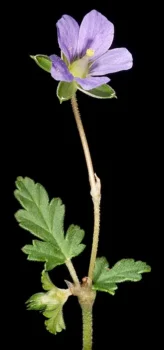
Australian Stork’s Bill: A Delicate Annual with a Curious Name
Meet Australian stork’s bill (Erodium cygnorum), a charming little annual that might just catch your eye with its whimsical name and delicate appearance. This petite forb brings a touch of understated elegance to gardens, though it comes with some considerations worth exploring before you decide to welcome it into your landscape.
What Exactly Is Australian Stork’s Bill?
Australian stork’s bill is a non-native annual forb that has found its way to North American gardens and wild spaces. As a forb, it’s essentially a soft-stemmed plant without woody tissue – think of it as the botanical equivalent of a gentle soul that completes its entire life cycle in just one growing season.
The plant gets its quirky stork’s bill name from its distinctive seed heads, which develop long, pointed projections that supposedly resemble a stork’s beak. It’s one of those delightful plant names that actually makes sense once you see it in action!
Where You’ll Find This Traveler
Originally from Australia (hence the name), this little wanderer has established itself in parts of California and Massachusetts. It’s what botanists call an introduced species – meaning it arrived from elsewhere but has managed to reproduce and persist on its own in the wild without human assistance.
- Species observed
- No observations
Garden Appeal and Landscape Role
Australian stork’s bill offers subtle charm rather than showstopping drama. Its small, typically pink to purple flowers create a delicate carpet effect, making it potentially useful as:
- Ground cover in naturalized areas
- Filler plant in wild or cottage-style gardens
- Addition to areas where you want a soft, informal look
Since it’s an annual, you can expect it to complete its full cycle within one growing season, which means it won’t become a permanent fixture unless it self-seeds successfully.
Growing Conditions and Care
While specific growing requirements for Erodium cygnorum are not extensively documented, most plants in the Erodium family prefer:
- Well-draining soil
- Full sun to partial shade
- Minimal water once established
- Poor to moderately fertile soil
As an annual, it typically requires minimal ongoing care beyond basic watering during establishment.
Should You Plant Australian Stork’s Bill?
Here’s where things get a bit nuanced. While Australian stork’s bill isn’t currently listed as invasive or noxious, it is a non-native species that has shown the ability to establish itself in wild areas. This means it could potentially compete with native plants for resources.
If you’re drawn to the delicate charm of stork’s bill plants, consider exploring native alternatives that could provide similar aesthetic appeal while supporting local ecosystems. Many regions have beautiful native annuals and perennials that offer comparable garden value with the added benefit of supporting local wildlife and pollinators.
The Bottom Line
Australian stork’s bill is a gentle, unassuming plant that might appeal to gardeners seeking subtle beauty and naturalized appeal. However, given its non-native status and our limited understanding of its long-term ecological impact, it’s worth considering whether native alternatives might better serve both your garden goals and local ecosystem health.
If you do choose to grow it, monitor its behavior in your garden and surrounding areas, and consider removing it if it shows signs of spreading aggressively beyond where you’ve planted it.