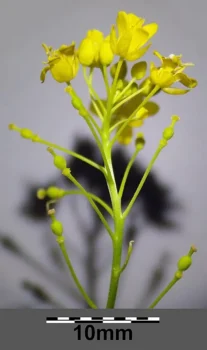
Austrian Yellowcress: A Non-Native Plant to Avoid in Your Garden
When it comes to choosing plants for your garden, Austrian yellowcress (Rorippa austriaca) is one species you’ll want to skip. While it might sound charming with its European moniker, this non-native perennial has earned itself a spot on the do not plant list for good reasons.
What is Austrian Yellowcress?
Austrian yellowcress is a perennial forb belonging to the mustard family. As a forb, it’s an herbaceous plant without significant woody tissue—think of it as your typical weedy plant that pops up in disturbed areas. Originally from Europe and Asia, this plant has made itself at home across North America, but not in a good way.
You might also encounter this plant listed under its scientific synonym, Nasturtium austriacum, in older botanical references.
Where Austrian Yellowcress Grows
This adaptable species has spread across a surprisingly wide range of North America. You can find Austrian yellowcress established in 19 states and provinces, including Alberta, Manitoba, California, Saskatchewan, Idaho, Iowa, Kentucky, Minnesota, Montana, Nebraska, New Hampshire, New Jersey, New York, North Dakota, Pennsylvania, Utah, Washington, Wisconsin, and Wyoming.
- Species observed
- No observations
Why You Shouldn’t Plant Austrian Yellowcress
Here’s where things get serious: Austrian yellowcress is classified as a noxious weed in Alaska, where it’s actually prohibited. This designation isn’t given lightly—it means the plant poses a significant threat to local ecosystems and agriculture.
As a non-native species, Austrian yellowcress reproduces spontaneously in the wild without human assistance and tends to persist once established. This aggressive behavior can crowd out native plants that local wildlife depends on for food and habitat.
Habitat Preferences
Austrian yellowcress shows a strong preference for wet areas, which makes it particularly problematic for sensitive wetland ecosystems. Its wetland status varies by region:
- Facultative Wetland status in the Arid West, Great Plains, and Midwest (usually found in wetlands)
- Facultative status in other regions (equally at home in wet and dry areas)
This adaptability to various moisture conditions makes it a formidable colonizer of disturbed sites, wetland edges, and agricultural areas.
Better Native Alternatives
Instead of planting Austrian yellowcress, consider these native alternatives that provide similar habitat benefits without the ecological risks:
- Native watercress species (Nasturtium officinale varieties native to your region)
- Marsh yellowcress (Rorippa palustris) – a native relative
- Other native wetland forbs appropriate for your specific region
Your local native plant society or extension office can help you identify the best native options for your area’s specific conditions.
If You Encounter Austrian Yellowcress
If you spot Austrian yellowcress on your property, especially if you live in Alaska or near sensitive wetlands, consider removal. The plant typically grows in zones 3-8 and prefers moist conditions, so check wetland margins and disturbed soils first.
For identification, look for small yellow flowers typical of the mustard family, growing on an herbaceous perennial that favors wet soils. When in doubt, contact your local extension office for proper identification and removal guidance.
The Bottom Line
While Austrian yellowcress might seem harmless enough, its classification as a noxious weed and aggressive spreading behavior make it a poor choice for any garden. By choosing native alternatives instead, you’ll support local ecosystems while avoiding potential legal issues in areas where this plant is prohibited. Your garden—and your local wildlife—will thank you for making the native choice!