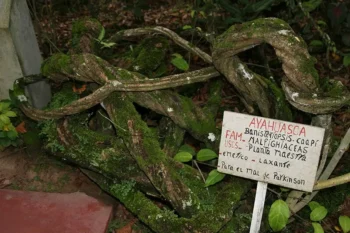
Ayahuasca Vine: A Mystical Amazon Climber for the Adventurous Gardener
If you’re drawn to plants with fascinating stories and unique origins, you might find yourself curious about the ayahuasca vine (Banisteriopsis caapi). This remarkable climbing plant hails from the depths of the Amazon rainforest and brings a touch of South American mystique to any garden lucky enough to accommodate its specific needs.
What is Ayahuasca Vine?
Banisteriopsis caapi, commonly known as ayahuasca vine, is a woody climbing vine native to the Amazon basin. You might also encounter it under its scientific synonyms Banisteriopsis inebrians or Banisteriopsis quitensis in older botanical references. This isn’t your typical backyard climber – it’s a plant steeped in cultural significance and requiring some serious dedication to grow successfully.
Where Does It Come From?
This vine calls the Amazon rainforest home, naturally occurring across Peru, Ecuador, Colombia, Brazil, Bolivia, and Venezuela. In its native habitat, it weaves through the forest canopy, creating natural screens and adding vertical interest to the complex rainforest ecosystem.
Should You Grow Ayahuasca Vine?
Here’s the honest truth: this plant is definitely not for everyone. Before you get excited about adding this Amazonian beauty to your garden, consider these factors:
The Challenges
- Extremely specific climate requirements (think tropical greenhouse conditions)
- Only hardy in USDA zones 10-12
- Needs consistent high humidity (60-80%)
- Requires substantial support structures for climbing
- Cultural and legal considerations around its traditional uses
The Rewards
- Unique conversation starter with fascinating botanical history
- Attractive heart-shaped foliage
- Delicate clusters of small white to pale pink flowers
- Supports small pollinators like bees and butterflies
- Perfect for ethnobotanical or tropical plant collections
Growing Conditions and Care
If you’re determined to grow this challenging beauty, here’s what it needs to thrive:
Climate Requirements
Unless you live in southern Florida, Hawaii, or similar tropical climates, you’ll need to grow this vine in a heated greenhouse or conservatory. It absolutely cannot tolerate temperatures below 30-40°F.
Light and Placement
Provide bright, filtered light or partial shade. Direct sunlight can scorch the leaves, so think dappled forest light rather than blazing sunshine.
Soil and Water
Use a rich, well-draining potting mix that retains some moisture but never becomes waterlogged. Keep the soil consistently moist but not soggy, and maintain high humidity around the plant.
Support Structure
This vine means business when it comes to climbing. Provide a sturdy trellis, arbor, or other support structure that can handle a substantial climbing plant.
Planting and Maintenance Tips
- Start with a young plant rather than trying to grow from seed (which can be challenging)
- Mist regularly to maintain humidity, or use a humidifier nearby
- Feed monthly during growing season with a balanced, diluted fertilizer
- Prune carefully to maintain shape and size
- Watch for common greenhouse pests like spider mites and scale
Consider Native Alternatives
If you’re looking for native climbing vines that are much easier to grow and provide similar aesthetic appeal, consider these alternatives based on your region:
- American groundnut (Apios americana) for edible flowers and attractive foliage
- Wild grape (Vitis species) for wildlife value and fall color
- Native honeysuckles (Lonicera species) for fragrant flowers and pollinator support
- Virginia creeper (Parthenocissus quinquefolia) for reliable coverage and stunning fall color
The Bottom Line
Banisteriopsis caapi is undeniably fascinating, but it’s definitely a plant for specialized collectors rather than casual gardeners. If you have the proper facilities, dedication, and genuine interest in ethnobotany, it can be a rewarding addition to a tropical plant collection. However, for most gardeners, choosing native climbing vines will provide better results with far less fuss while supporting local ecosystems.
Remember, successful gardening often means matching the right plant to the right conditions – and sometimes the most interesting plants aren’t necessarily the most practical choices for our gardens.