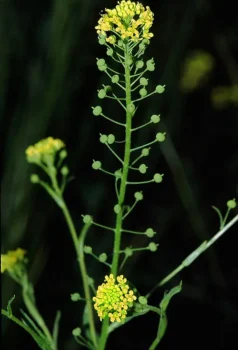
Ballmustard: A Hardy Non-Native Annual Worth Understanding
If you’ve ever wondered about that cheerful yellow-flowered plant popping up in disturbed areas and roadsides, you might be looking at ballmustard (Neslia paniculata). This unassuming annual has quite a story to tell, and whether you’re dealing with it in your garden or considering it as a ground cover option, here’s everything you need to know about this European transplant.
What Is Ballmustard?
Ballmustard, scientifically known as Neslia paniculata, is an annual forb that belongs to the mustard family. As a forb, it’s a non-woody plant that completes its entire life cycle in a single growing season. You might also see it referenced by its synonym Myagrum paniculatum in older gardening texts, but don’t let the name confusion fool you – it’s the same plant.
This hardy little annual originally hails from Europe and Asia, making it a non-native species throughout North America. However, it has established itself quite successfully across the continent, reproducing spontaneously in the wild without any human intervention.
Where You’ll Find Ballmustard
Ballmustard has spread extensively across North America since its introduction. You can find it thriving in an impressive range of locations, from the chilly territories of Alaska and Northwest Territories down through most Canadian provinces including Alberta, British Columbia, Manitoba, New Brunswick, Nova Scotia, Ontario, Prince Edward Island, Quebec, Saskatchewan, and Yukon. It’s also established itself in Newfoundland.
In the United States, ballmustard grows in numerous states spanning from coast to coast, including Connecticut, Idaho, Illinois, Indiana, Iowa, Maine, Massachusetts, Michigan, Minnesota, Missouri, New Hampshire, New Jersey, New York, North Dakota, Ohio, Oregon, Pennsylvania, South Dakota, Vermont, Washington, and Wisconsin.
- Species observed
- No observations
Should You Plant Ballmustard?
Here’s where things get interesting. Ballmustard isn’t your typical garden center find, and there are good reasons to think carefully before introducing it to your landscape.
The Case Against Ballmustard
As a non-native species, ballmustard doesn’t provide the same ecological benefits as native plants. While it does offer some nectar for small pollinators like flies and tiny bees, native alternatives would better support your local ecosystem’s food web and provide more comprehensive wildlife benefits.
Additionally, ballmustard can be quite the self-seeder. Once established, it readily spreads on its own, which might be more enthusiasm than you bargained for in a managed garden setting.
When Ballmustard Might Work
That said, ballmustard does have some redeeming qualities. It’s incredibly tough and adaptable, making it potentially useful for challenging sites where other plants struggle. Its small yellow flowers provide a cheerful spring display, and it can form attractive carpet-like coverage in naturalized areas.
Growing Conditions and Care
If you do decide to work with ballmustard, you’ll find it remarkably undemanding. This plant thrives in USDA hardiness zones 3-8, making it suitable for most temperate climates.
Preferred conditions include:
- Full sun to partial shade
- Poor to average soils (it’s not picky!)
- Good drainage, though it tolerates various soil types
- Minimal water once established
The beauty of ballmustard lies in its low-maintenance nature. It’s drought tolerant once established and actually prefers lean soils over rich, fertile ground. This makes it potentially useful for difficult sites like slopes, disturbed areas, or spots where you want coverage without much fuss.
Planting and Care Tips
If you’re working with existing ballmustard or considering introducing it:
- Sow seeds in early spring or allow natural self-seeding
- Avoid fertilizing – it prefers lean conditions
- Water sparingly; overwatering can actually harm the plant
- Be prepared for enthusiastic self-seeding
- Consider containment strategies if you don’t want it spreading
Better Native Alternatives
Before committing to ballmustard, consider these native alternatives that provide similar benefits while supporting local ecosystems:
- Wild bergamot (Monarda species) for pollinator-friendly flowers
- Native mustard family members like field pennycress where appropriate
- Regional wildflower mixes designed for your specific area
- Native ground covers suited to your local conditions
The Bottom Line
Ballmustard is a tough, adaptable plant that can serve a purpose in the right setting. While it won’t win awards for supporting native wildlife, it’s not necessarily a villain either. If you’re dealing with challenging growing conditions and need something virtually indestructible, it might fit the bill. However, for most gardening situations, native alternatives will serve you – and your local ecosystem – much better.
Whether you encounter ballmustard as a volunteer in your garden or consider it for a difficult site, now you know what you’re working with. Sometimes the most interesting plants are the ones that teach us about adaptability, persistence, and the complex relationships between plants and places.