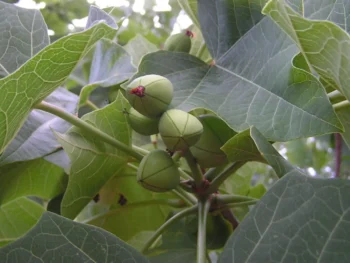
Barbados Nut: A Tropical Shrub for Warm-Climate Gardens
Looking to add some tropical flair to your garden? The Barbados nut (Jatropha curcas) might catch your eye with its distinctive palmate leaves and cheerful yellow-green flowers. But before you rush to the nursery, let’s dive into what this interesting shrub has to offer – and whether it’s the right fit for your landscape.
What is Barbados Nut?
Barbados nut is a perennial shrub that typically grows as a multi-stemmed woody plant, usually reaching heights of 13 to 16 feet (4 to 5 meters). Under certain conditions, it can grow taller or develop a single trunk, giving it an almost tree-like appearance. You might also see it listed under its botanical synonym, Curcas curcas, though Jatropha curcas is the accepted name.
Where Does It Come From?
Originally native to Central America and Mexico, Barbados nut has traveled far from its homeland. It’s now established as a non-native species that reproduces spontaneously in several U.S. territories and states, including Florida, Hawaii, Guam, Palau, Puerto Rico, and the U.S. Virgin Islands. The plant has shown it can persist and spread without human intervention in these warm climates.
- Species observed
- No observations
Garden Appeal and Landscape Role
What makes Barbados nut attractive to gardeners? Its architectural form and interesting foliage give it a distinctly tropical look. The large, hand-shaped leaves create bold texture, while small clusters of yellow-green flowers add seasonal interest. In the landscape, it works well as:
- A specimen plant for tropical or subtropical gardens
- Part of a drought-tolerant landscape design
- An informal hedge or screen
- A focal point in xerophytic (dry) gardens
Growing Conditions and Care
Barbados nut is remarkably adaptable and low-maintenance once established. Here’s what it needs to thrive:
Climate: Best suited for USDA hardiness zones 9-11, as it’s quite sensitive to frost.
Sun and Soil: Prefers full sun and well-draining soil. It’s quite drought-tolerant once its roots are established, making it excellent for low-water gardens.
Moisture Preferences: This shrub definitely prefers dry conditions. In most regions, it’s classified as Obligate Upland, meaning it almost never occurs in wetlands. Even in Hawaii, where it’s listed as Facultative Upland, it still usually grows in non-wetland areas.
Planting and Care Tips
- Plant in spring after the last frost danger has passed
- Choose a sunny location with good drainage
- Water regularly during the first growing season to establish roots
- Once established, water only during extended dry periods
- Prune lightly to maintain desired shape and size
- Protect from frost in borderline climates
- Fertilize sparingly – too much nutrition can reduce flowering
Wildlife and Pollinator Benefits
While Barbados nut does produce flowers that can attract some pollinators, it’s not considered a major pollinator plant. The small yellow-green blooms may draw occasional visitors, but you’ll want to include other plants if supporting pollinators is a primary goal.
Should You Plant Barbados Nut?
The decision depends on your garden goals and location. If you’re in zones 9-11 and want a low-maintenance, drought-tolerant shrub with tropical appeal, Barbados nut could work well. However, since it’s non-native and has shown the ability to naturalize, consider these factors:
Pros:
- Very low maintenance once established
- Excellent drought tolerance
- Interesting architectural form
- Fast growing
Considerations:
- Non-native species that can self-seed
- Limited wildlife value compared to native alternatives
- Frost sensitive
Native Alternatives to Consider
If you love the idea of a drought-tolerant shrub but prefer supporting native ecosystems, consider these alternatives depending on your region:
- In Florida: Firebush (Hamelia patens) or Wild Coffee (Psychotria nervosa)
- In Hawaii: Native Hibiscus species or ʻAkoko (Euphorbia species)
- In Puerto Rico: Native Cordia or Erithalis species
These native options often provide superior wildlife habitat and pollinator support while offering similar low-maintenance growing characteristics.
The Bottom Line
Barbados nut can be an attractive addition to warm-climate gardens, especially if you’re dealing with challenging dry conditions. Just remember that choosing plants is about more than just what looks good – consider the broader impact on your local ecosystem. Whether you go with Barbados nut or explore native alternatives, the key is selecting plants that will thrive in your specific conditions while supporting your gardening goals.