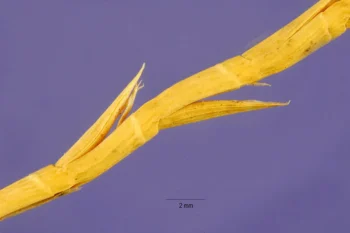
Non-native Plants

Barbgrass

Hainardia cylindrica

USDA symbol: HACY

annual grass

Lower 48 states: non-native, naturalized

If you’ve stumbled across the name barbgrass while researching plants for your garden, you might be wondering whether this grass species deserves a spot in your landscape. Let’s dive into what makes Hainardia cylindrica tick and whether it’s right for your gardening goals. Barbgrass (Hainardia cylindrica) is an annual grass ...

Barbgrass: What You Need to Know About This Non-Native Annual

If you’ve stumbled across the name barbgrass while researching plants for your garden, you might be wondering whether this grass species deserves a spot in your landscape. Let’s dive into what makes Hainardia cylindrica tick and whether it’s right for your gardening goals.

What Exactly Is Barbgrass?

Barbgrass (Hainardia cylindrica) is an annual grass that’s made itself at home in several U.S. states, despite originally hailing from somewhere else entirely. You might also see it listed under its former scientific names, including Lepturus cylindricus or Rottboellia cylindrica, if you’re digging through older botanical references.

As a member of the grass family, barbgrass has that typical graminoid growth habit – think narrow leaves and seed heads that won’t win any beauty contests but serve their purpose in the plant world.

Where You’ll Find Barbgrass Growing

Currently, barbgrass has established populations in California, Louisiana, Oregon, South Carolina, and Texas. This non-native species has managed to reproduce and persist on its own in these areas without human assistance.

  • Species observed
  • No observations

The Garden Reality Check

Here’s the thing about barbgrass – it’s not exactly what you’d call a showstopper. This annual grass tends to be fairly inconspicuous, completing its entire life cycle within a single growing season. It’s adapted to handle various moisture conditions, typically showing up as a facultative wetland species, meaning it’s comfortable in both wet and moderately dry conditions.

Since barbgrass thrives in USDA hardiness zones 8-10 (based on where it currently grows), gardeners in these regions are most likely to encounter it.

Should You Plant Barbgrass?

While barbgrass isn’t known to be invasive or particularly harmful, there are some important considerations for gardeners:

  • It’s a non-native species, so it won’t provide the same ecological benefits as native plants
  • Its aesthetic appeal is minimal compared to many native grass alternatives
  • It offers limited benefits to pollinators since it’s wind-pollinated
  • Wildlife benefits are largely unknown

Better Alternatives for Your Garden

Instead of barbgrass, consider these native grass alternatives that will give you more bang for your gardening buck:

  • Native bunch grasses specific to your region
  • Local sedges that provide similar texture
  • Indigenous annual grasses that support local wildlife

These alternatives will not only look great but also support local ecosystems, provide food for native wildlife, and require less maintenance once established.

If You Encounter Barbgrass

Since barbgrass isn’t considered invasive, you don’t need to panic if you spot it in your area. However, if you’re aiming for a native plant garden or want to maximize ecological benefits, you’ll probably want to focus your efforts on species that naturally belong in your region.

The bottom line? While barbgrass isn’t a garden villain, it’s not exactly a garden hero either. Your landscape will likely benefit more from choosing native alternatives that provide better wildlife habitat, require less water once established, and contribute to your local ecosystem’s health.

Remember, the best garden is one that works with nature rather than against it – and that usually means going native when possible!

Hainardia cylindrica is also known as...

Often we refer to plants by their common names. When shopping for plants the scientific name is the best way to positively identify the plant species you desire. But some plants have more than one name! While it doesn't happen often, nurseries might display one name while you're searching for another. Hainardia cylindrica is also known as:

Lepturus cylindricus | USDA symbol: LECY2
Monerma cylindrica & | USDA symbol: MOCY
Rottboellia cylindrica | USDA symbol: ROCY

Why do some plants have more than one name? Over time plant species may be renamed for a few reasons:

  1. Botanists in different regions named the same plant without knowing it had already been classified.
  2. A species was reclassified after scientific advances in, for example, DNA analysis.
  3. Slight variations within a species are sometimes mistakenly identified as entirely new species.

Wetland Status

The rule of seasoned gardeners and landscapers is to choose the "right plant for the right place" — matching plants to their ideal growing conditions, so they'll thrive with less care and fewer inputs. But the simplicity of this catchphrase conceals how tricky plant selection can be if you don't have the right information. While tags on nursery plants list watering requirements, there's more to the story.

Knowing a plant's wetland status can simplify the process by revealing the interaction between plants, water, and soil. You might be surprised to learn that popular landscape plants are wetland species! And what may be a wetland plant in one area, in another it might thrive in drier conditions. The table below gives insight into the preferred growing conditions of this plant throughout its geographical distribution.

Region
Preferred Habitat

Arid West (AZ, CA, CO, ID, MT, NV, NM, OR, TX, UT, WA, WY)

Facultative Wetland

Atlantic and Gulf Coastal Plain (AL, AR, DC, DE, FL, GA, IL, KY, LA, MD, MS, MO, NC, NJ, OK, PA, SC, TN, TX, VA)

Facultative Wetland

Western Mountains, Valleys, and Coast (AZ, CA, CO, ID, MT, NV, NM, OR, SD, UT, WA, WY)

Facultative Wetland
Wetland Glossary
Obligate Wetland
Facultative Wetland
Facultative
Facultative Upland
Obligate Upland
Almost always occurs in wetlands
Usually occurs in wetlands but may occur in non-wetlands
Can occur in wetlands and non-wetlands
Usually occurs in non-wetlands but may occur in wetlands
Almost never occurs in wetlands

Classification

Group: Monocot
Kingdom: Plantae - Plants
Subkingdom: Tracheobionta - Vascular plants
Superdivision: Spermatophyta - Seed plants
Division: Magnoliophyta - Flowering plants
Class: Liliopsida - Monocotyledons
Subclass: Commelinidae
Order: Cyperales
Family: Poaceae Barnhart - Grass family
Genus: Hainardia Greuter - barbgrass

Species: Hainardia cylindrica (Willd.) Greuter - barbgrass

Plant data source: USDA, NRCS 2025. The PLANTS Database. https://plants.usda.gov,. 2/25/2025. National Plant Data Team, Greensboro, NC USA