Barestem Teesdalia: A Tiny European Annual Worth Knowing
If you’ve ever spotted tiny white flowers carpeting sandy or disturbed ground in early spring, you might have encountered barestem teesdalia (Teesdalia nudicaulis). This diminutive annual is one of those plants that flies under the radar—literally and figuratively—but has quietly established itself across much of North America.
What is Barestem Teesdalia?
Barestem teesdalia is a small annual forb in the mustard family, originally native to Europe’s Mediterranean regions and Atlantic coasts. Despite its humble size—rarely exceeding 6 inches tall—this little plant has made itself quite at home in North America, where it’s considered a non-native species that reproduces spontaneously in the wild.
You might also see this plant listed under its botanical synonym Iberis nudicaulis, but Teesdalia nudicaulis is the accepted name today.
Where Does It Grow?
Barestem teesdalia has established populations across a surprisingly wide range of North American locations. You can find it growing in British Columbia, Connecticut, Delaware, Georgia, Idaho, Indiana, Maryland, Massachusetts, Michigan, New Jersey, New York, North Carolina, Oregon, Pennsylvania, South Carolina, Virginia, and Washington.
- Species observed
- No observations
What Does It Look Like?
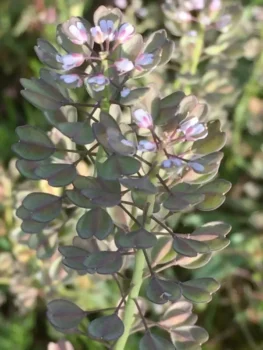
Don’t expect this plant to make a bold statement in your garden. Barestem teesdalia is all about subtle charm:
- Forms small rosettes of tiny, often deeply lobed leaves
- Produces delicate white flowers on slender, nearly leafless stems (hence barestem)
- Flowers are small—we’re talking really small—but appear in clusters
- The entire plant rarely grows taller than 6 inches
- Blooms in early spring, then completes its life cycle by summer
Should You Grow Barestem Teesdalia?
Here’s where things get interesting. As a non-native species, barestem teesdalia isn’t necessarily the first choice for native plant enthusiasts. However, it’s not considered invasive or particularly problematic either—it simply exists in the landscape without causing major ecological disruption.
You might want to consider growing it if:
- You have sandy, poor soils where few other plants thrive
- You’re working on stabilizing disturbed ground
- You appreciate tiny, delicate wildflowers
- You want a low-maintenance annual that self-seeds
However, if you’re committed to native gardening, consider these alternatives that provide similar benefits:
- Native spring ephemerals like spring beauty or toothwort
- Small native mustards like field pennycress (where appropriate)
- Native ground covers suited to your specific region
Growing Conditions and Care
If you do decide to grow barestem teesdalia, you’ll find it refreshingly undemanding:
Preferred conditions:
- Sandy, well-drained soils (it actually prefers poor soil)
- Full sun to partial shade
- USDA hardiness zones 5-9
- Tolerates drought and neglect
Planting and care:
- Scatter seeds in fall or early spring
- No soil preparation needed—it thrives in disturbed ground
- Water sparingly, if at all
- Allow plants to self-seed for future generations
- Expect flowers from early spring through late spring
Wildlife and Pollinator Value
While barestem teesdalia won’t attract large, showy butterflies, its small flowers do provide early-season nectar for tiny pollinators like flies and small native bees. Since it blooms when few other flowers are available, it can serve as a minor food source during the crucial early spring period.
The Bottom Line
Barestem teesdalia is neither a garden showstopper nor an ecological villain—it’s simply a quiet little plant that has found its niche in North American landscapes. If you have sandy, disturbed areas where you want some basic ground cover and tiny spring flowers, it might fit the bill. Just remember that supporting native alternatives will generally provide greater benefits to local wildlife and ecosystems.
Sometimes the most interesting plants are the ones we overlook, and barestem teesdalia definitely falls into that category. Whether you choose to welcome it or focus on native alternatives, at least now you’ll know what those tiny white flowers are when you spot them carpeting the ground each spring.