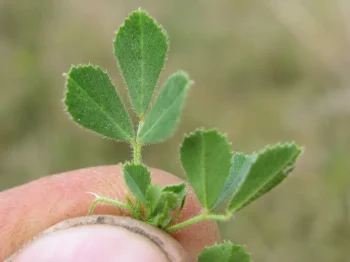
Barrelclover: A Mediterranean Ground Cover for Drought-Tolerant Gardens
If you’re looking for a low-maintenance ground cover that can handle hot, dry conditions, barrelclover (Medicago truncatula) might catch your attention. This small Mediterranean legume, also known as barrel medic, has been making its way into gardens where water conservation is a priority. But before you dive in, let’s explore what makes this plant tick and whether it deserves a spot in your landscape.
What Is Barrelclover?
Barrelclover is a compact annual legume originally from the Mediterranean region, North Africa, and southwestern Asia. You might also see it listed under its synonym Medicago tribuloides, but don’t let the scientific names confuse you – we’re talking about the same cheerful little plant that produces tiny yellow flowers and distinctive three-leaflet leaves.
Since this plant isn’t native to North America, it’s worth considering native alternatives that provide similar benefits while supporting local ecosystems. However, if you’re drawn to its drought tolerance and nitrogen-fixing abilities, barrelclover can still play a useful role in certain garden settings.
Garden Appeal and Landscape Role
Don’t expect barrelclover to win any beauty contests – its charm lies in its practicality rather than showstopping looks. This low-growing plant forms a dense mat of small, clover-like leaves topped with clusters of tiny bright yellow flowers. While the individual blooms are modest, they create a pleasant carpet effect when planted in masses.
In the landscape, barrelclover works best as:
- Ground cover in naturalized areas
- Soil improvement tool in newly disturbed sites
- Filler plant in Mediterranean-style gardens
- Erosion control on slopes
Growing Conditions and Care
One of barrelclover’s biggest selling points is its easygoing nature. This plant thrives in USDA hardiness zones 8-11 and prefers conditions that might stress out more finicky plants.
Ideal growing conditions include:
- Full sun exposure
- Well-drained soils (it actually prefers poor to moderately fertile soil)
- Low to moderate water once established
- pH ranging from neutral to slightly alkaline
As a facultative upland plant, barrelclover usually grows in non-wetland areas but can tolerate occasional wet conditions. This flexibility makes it useful for transitional zones in your landscape.
Planting and Maintenance
Growing barrelclover is refreshingly straightforward. The easiest method is direct seeding in fall or early spring. Simply scatter seeds over prepared soil and lightly rake them in – no need for fussy planting techniques.
Once established, this plant practically takes care of itself. As an annual, it will complete its lifecycle in one growing season, but it often self-seeds readily, creating new plants for the following year. The biggest maintenance task might be managing its spread if you don’t want it wandering into other garden areas.
Benefits for Pollinators and Wildlife
While barrelclover’s small yellow flowers might look insignificant, they’re actually valuable nectar sources for bees, small butterflies, and other pollinators. The plant blooms over an extended period, providing consistent food sources during its growing season.
As a legume, barrelclover also fixes nitrogen in the soil through its relationship with beneficial bacteria, gradually improving soil fertility in areas where it grows.
Should You Plant Barrelclover?
Barrelclover could be a good choice if you:
- Need a low-maintenance ground cover for poor soils
- Want to improve soil nitrogen naturally
- Are creating a Mediterranean-themed garden
- Have hot, dry areas where other plants struggle
However, since barrelclover isn’t native to North America, consider these native alternatives that provide similar benefits:
- Native clovers like Trifolium wildenovii (Tomcat clover)
- Wild lupines (Lupinus species)
- Native vetches (Vicia species)
These native options will provide the same nitrogen-fixing benefits while supporting local wildlife and maintaining ecological balance.
The Bottom Line
Barrelclover is an undemanding plant that delivers practical benefits in challenging growing conditions. While it won’t be the star of your garden, it can play a useful supporting role in water-wise landscapes and areas where soil improvement is needed. Just remember to consider native alternatives first – your local pollinators and wildlife will thank you for it!