Basket Willow: A Fast-Growing Tree with Traditional Uses
If you’ve ever admired the intricate weaving of a handmade basket, you might be looking at the handiwork of Salix viminalis, commonly known as basket willow. This fast-growing tree has been prized for centuries for its long, flexible branches that are perfect for traditional basketry and craftwork.
What is Basket Willow?
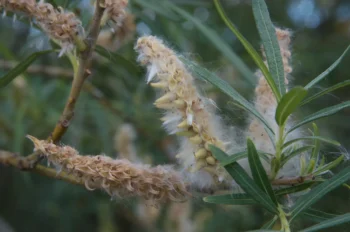
Basket willow is a perennial tree that typically grows 13 to 16 feet tall, though under certain conditions it may develop a shorter, multi-stemmed growth form. This member of the willow family produces narrow, lance-shaped leaves with a distinctive silvery-green color and cheerful yellow-green catkins that appear in early spring before the leaves emerge.
Native Status and Distribution
Here’s something important to know: basket willow isn’t native to North America. Originally from Europe and western Asia, this species was introduced and has naturalized across many regions. It now reproduces on its own in the wild throughout much of the northern United States and southern Canada.
You’ll find established populations in states including Connecticut, Indiana, Maine, Massachusetts, Michigan, New Hampshire, New Jersey, New York, Ohio, Rhode Island, Vermont, Virginia, and Wisconsin. In Canada, it’s present in New Brunswick, Nova Scotia, Ontario, Prince Edward Island, Quebec, and Newfoundland.
- Species observed
- No observations
Should You Plant Basket Willow?
The answer depends on what you’re hoping to achieve in your landscape. Basket willow excels in specific situations but isn’t the best choice for every garden.
When Basket Willow Makes Sense
- Erosion control: Its robust root system helps stabilize soil along waterways
- Craft projects: If you’re interested in traditional basketry, this is your tree
- Quick screening: Fast growth provides rapid privacy on large properties
- Wetland restoration: Thrives in wet conditions where other trees struggle
- Early pollinator support: Spring catkins feed bees when few other flowers are available
When to Consider Alternatives
Basket willow isn’t ideal for small gardens or formal landscapes. Its vigorous growth and spreading nature can quickly overwhelm compact spaces. Additionally, since it’s non-native, you might prefer to support local ecosystems by choosing indigenous alternatives.
Consider these native willows instead: black willow (Salix nigra), pussy willow (Salix discolor), or sandbar willow (Salix interior). These species provide similar benefits while supporting native wildlife and maintaining ecological balance.
Growing Conditions and Care
If you decide basket willow fits your needs, you’ll find it remarkably easy to grow. This adaptable tree thrives in USDA hardiness zones 3 through 7.
Preferred Conditions
- Moisture: Loves wet feet – perfect for soggy areas other plants reject
- Light: Full sun to partial shade
- Soil: Tolerates poor soils and seasonal flooding
- Space: Needs room to spread – not suitable for small yards
Planting and Care Tips
Basket willow is wonderfully low-maintenance once established. Here’s how to get started:
- Propagation: Easiest grown from cuttings – they root readily in moist soil
- Watering: Keep consistently moist until established, then it’s quite drought-tolerant
- Pruning: Annual pruning encourages the long, straight shoots prized for basketry
- Maintenance: Minimal care required once mature
Wetland Characteristics
Basket willow has an interesting relationship with water. Across most regions, it’s classified as a facultative wetland plant, meaning it usually grows in wetlands but can tolerate drier conditions. However, in the Western Mountains, Valleys, and Coast region, it’s considered an obligate wetland plant that almost always requires wet conditions.
The Bottom Line
Basket willow serves specific purposes well – erosion control, craft material, and wetland restoration. While it’s not native, it’s not considered invasive either. If you have the space and a practical use for its fast growth and flexible branches, it can be a valuable addition to your landscape. However, for most home gardeners, native willow species will provide similar benefits while better supporting local ecosystems.
Whatever you choose, you’ll be adding a tree that connects you to centuries of traditional craftsmanship and provides valuable early-season resources for pollinators.