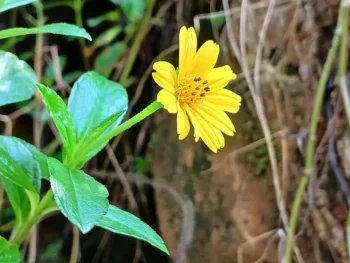
Bay Biscayne Creeping-Oxeye: A Vibrant Ground Cover with Important Considerations
If you’re searching for a cheerful, low-maintenance ground cover that produces bright yellow blooms, you’ve likely encountered Bay Biscayne creeping-oxeye (Sphagneticola trilobata). Also known simply as wedelia, this sprawling perennial has become a popular choice for gardeners in warm climates. But before you add it to your shopping list, there are some important things to know about this non-native beauty.
What is Bay Biscayne Creeping-Oxeye?
Bay Biscayne creeping-oxeye is a forb – essentially an herbaceous flowering plant without significant woody growth. Don’t let the technical term fool you; this is simply a low-growing, spreading plant that produces lovely daisy-like flowers. The plant gets its name from its distinctive three-lobed leaves and its tendency to creep across the ground, forming dense mats of coverage.
You might also see this plant sold under several other botanical names, as it has quite a few synonyms including Wedelia trilobata, Complaya trilobata, and Thelechitonia trilobata. The variety of names reflects its widespread cultivation and study across different regions.
Where Does It Grow?
This plant has made itself at home across many warm-weather locations in the United States and its territories. You’ll find established populations in Florida, Hawaii, Louisiana, and various U.S. territories including Guam, Palau, Puerto Rico, the U.S. Minor Outlying Islands, and the Virgin Islands. However, it’s important to note that Bay Biscayne creeping-oxeye is not native to any of these areas – it’s an introduced species that has naturalized and now reproduces on its own in the wild.
- Species observed
- No observations
The Appeal of This Sunny Ground Cover
There’s no denying that Bay Biscayne creeping-oxeye has visual appeal. The plant produces bright yellow, daisy-like flowers that bloom prolifically, creating a cheerful carpet of color. Its glossy, three-lobed leaves provide attractive foliage even when the plant isn’t flowering. As a ground cover, it’s quite effective at filling in bare spaces and can help with erosion control on slopes.
Pollinators seem to appreciate this plant too, with bees and butterflies often visiting the nectar-rich flowers. For gardeners looking to support local pollinators, the abundant blooms can provide a food source.
Growing Conditions and Care
One reason for this plant’s popularity (and its success as a naturalized species) is its adaptability. Bay Biscayne creeping-oxeye thrives in USDA hardiness zones 9-11, making it suitable for tropical and subtropical climates.
Light requirements: Full sun to partial shade
Soil preferences: Tolerates various soil types
Water needs: Drought tolerant once established
Maintenance: Minimal care required
The plant’s wetland status varies by region – it can grow in both wetland and non-wetland conditions in some areas, while preferring non-wetlands in others. This flexibility makes it adaptable to different landscape situations.
Important Considerations Before Planting
While Bay Biscayne creeping-oxeye can be an effective and attractive ground cover, its non-native status deserves careful consideration. As an introduced species that readily naturalizes and spreads, it has the potential to impact local ecosystems by competing with native plants.
Before choosing this plant, consider whether there might be native ground cover alternatives that could provide similar benefits while supporting your local ecosystem. Native plants are typically better adapted to local conditions and provide more comprehensive benefits to native wildlife and pollinators.
Planting and Maintenance Tips
If you decide that Bay Biscayne creeping-oxeye is right for your landscape, here are some growing tips:
- Plant in well-draining soil, though the plant tolerates various soil conditions
- Provide regular water during establishment, then reduce frequency as the plant becomes drought tolerant
- Be prepared for rapid spread – this plant grows quickly and can cover large areas
- Consider installing barriers if you want to contain its growth to specific areas
- Minimal fertilization needed – this plant is quite self-sufficient
- Deadhead spent flowers if you want to prevent self-seeding
The Bottom Line
Bay Biscayne creeping-oxeye offers bright blooms, easy care, and effective ground coverage for warm-climate gardens. However, as a non-native species with a tendency to naturalize, it’s worth exploring native alternatives first. If you do choose to grow it, be mindful of its spreading nature and consider ways to prevent it from escaping cultivation into natural areas.
Whether you’re drawn to its sunny flowers or need a reliable ground cover for challenging spots, understanding both the benefits and considerations of this plant will help you make the best choice for your garden and local environment.