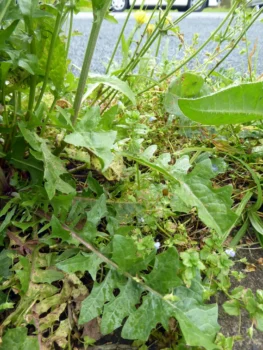
Beaked Hawksbeard: A European Wildflower Making Itself at Home
If you’ve spotted a dandelion-like yellow flower with deeply lobed leaves in your garden or local wild spaces, you might be looking at beaked hawksbeard (Crepis vesicaria taraxacifolia). This European native has quietly established itself across several North American regions, bringing a touch of Old World charm to our landscapes.
What Exactly is Beaked Hawksbeard?
Beaked hawksbeard belongs to the sunflower family and shares many characteristics with its more famous cousin, the dandelion. This herbaceous plant lacks any woody stems above ground, making it a classic forb – essentially a fancy botanical term for a soft-stemmed flowering plant. What makes it particularly interesting is its flexible life cycle: it can complete its entire journey from seed to flower in one year (annual) or take a more leisurely two-year approach (biennial).
The plant goes by several scientific synonyms, including Crepis vesicaria L. ssp. haenseleri and Crepis vesicaria L. var. taraxacifolia, which can make identification a bit tricky for plant enthusiasts trying to pin down exactly what they’re looking at.
Where You’ll Find It Growing
Originally from Europe, beaked hawksbeard has made itself quite comfortable in North America. It’s currently established across a diverse range of locations, from the Pacific Northwest to the Eastern seaboard. You can find it growing wild in:
- British Columbia
- California
- Connecticut
- New York
- North Carolina
- Oregon
- Pennsylvania
This wide distribution suggests it’s quite adaptable to different climates and growing conditions.
- Species observed
- No observations
Should You Grow Beaked Hawksbeard?
Here’s where things get interesting. As a non-native species that reproduces on its own and persists without human help, beaked hawksbeard sits in that gray area many gardeners face: it’s not necessarily harmful, but it’s not native either.
The plant doesn’t currently carry any official invasive or noxious weed designations in the areas where it grows, which suggests it’s generally well-behaved in the landscape. However, if you’re passionate about supporting local ecosystems and native wildlife, you might want to consider native alternatives that provide similar aesthetic appeal while offering better ecological benefits.
Native Alternatives to Consider
If you love the bright yellow, dandelion-like flowers that beaked hawksbeard provides, consider these native alternatives:
- Wild bergamot for similar height and wildlife appeal
- Native sunflowers for bold yellow blooms
- Black-eyed Susan for cheerful, long-lasting flowers
- Native hawkweeds, where available in your region
If You Choose to Grow It
Should you decide to welcome beaked hawksbeard into your garden, or if it’s already made itself at home, here’s what you should know about keeping it happy. Unfortunately, specific growing requirements for this particular species aren’t well-documented, but based on its widespread distribution and adaptability, it likely tolerates a range of conditions.
As with most members of the sunflower family, it probably appreciates well-draining soil and at least some sun exposure. Its annual to biennial nature means you can expect it to reseed itself if conditions are favorable.
The Bottom Line
Beaked hawksbeard represents one of those garden dilemmas that many of us face: a non-native plant that’s not causing obvious harm but isn’t contributing to local ecology either. Whether you choose to encourage it, tolerate it, or replace it with native alternatives depends on your gardening philosophy and goals.
If supporting native wildlife and maintaining regional plant communities is important to you, consider gradually replacing any beaked hawksbeard with native species that provide similar aesthetic appeal. If you’re more focused on low-maintenance plants that can thrive without much fuss, and it’s already established in your area, there’s no urgent need to eliminate it.
Whatever you decide, remember that every garden is a personal expression, and the best plants for your space are the ones that align with both your aesthetic preferences and environmental values.