Beale’s Barberry: A Beautiful but Problematic Garden Choice
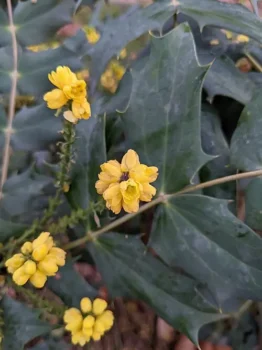
If you’ve ever wandered through a woodland garden in late winter and caught a whiff of sweet, honey-like fragrance, you might have encountered Beale’s barberry (Mahonia bealei). This striking evergreen shrub certainly knows how to make an entrance with its architectural leaves and cheerful yellow blooms. But before you rush to add one to your shopping cart, there’s an important conversation we need to have about this particular plant.
What Exactly is Beale’s Barberry?
Beale’s barberry, scientifically known as Mahonia bealei, is a perennial evergreen shrub that typically grows 4 to 5 meters (13 to 16 feet) tall, though it can sometimes reach greater heights depending on conditions. Originally hailing from China and Taiwan, this multi-stemmed woody plant has made itself quite at home in parts of the southeastern United States.
You might also see this plant listed under its former botanical name, Berberis bealei Fortune, in older gardening references.
Where You’ll Find It Growing
Currently, Beale’s barberry has established populations across several southeastern states, including Alabama, District of Columbia, Florida, Georgia, Maryland, North Carolina, South Carolina, and Virginia. What started as an ornamental garden plant has become a permanent resident that reproduces on its own in the wild.
- Species observed
- No observations
The Invasive Species Dilemma
Here’s where things get complicated. While Beale’s barberry might look lovely in your garden, it’s considered invasive in North Carolina and is on watch lists in Delaware and Alabama (listed as Category 2). This means it has the unfortunate tendency to escape cultivation and crowd out native plants in natural areas.
When a non-native plant becomes invasive, it can disrupt local ecosystems by outcompeting native species that wildlife depends on for food and shelter. This is why many gardening experts now recommend avoiding Beale’s barberry, despite its undeniable ornamental appeal.
What Makes It Appealing (And Problematic)
It’s easy to see why gardeners fell in love with this plant. Beale’s barberry offers:
- Large, compound evergreen leaves with spiny edges that create dramatic texture
- Fragrant clusters of bright yellow flowers that appear in late winter to early spring
- Blue-black berries that follow the flowers
- Tolerance for shade conditions where many other flowering shrubs struggle
- Early nectar source for pollinators when few other plants are blooming
These same qualities that make it attractive in gardens—particularly its ability to thrive in shaded woodland conditions and reproduce reliably—are exactly what help it spread into natural areas.
Growing Conditions and Care
For those in areas where it’s not considered invasive and local regulations permit, Beale’s barberry thrives in USDA hardiness zones 6-9. It prefers:
- Partial to full shade locations
- Moist, well-drained soil
- Acidic to neutral soil pH
- Protection from strong winds
The plant requires minimal care once established, needing only occasional watering during dry spells and very light pruning to maintain shape.
Better Native Alternatives
Instead of planting Beale’s barberry, consider these native alternatives that provide similar benefits without the ecological concerns:
- American beautyberry (Callicarpa americana) – Offers colorful berries and wildlife value
- Spicebush (Lindera benzoin) – Provides early spring flowers and supports native butterflies
- Elderberry (Sambucus canadensis) – Features showy flowers and berries beloved by birds
- Native azaleas (Rhododendron species) – Deliver spectacular spring blooms in woodland settings
The Bottom Line
While Beale’s barberry certainly has ornamental merit, its invasive potential makes it a poor choice for responsible gardeners. The good news is that native alternatives can provide similar aesthetic value while supporting local wildlife and ecosystems. When we choose native plants over potentially invasive ones, we’re not just creating beautiful gardens—we’re being good neighbors to the natural world around us.
Before adding any new plant to your landscape, it’s always wise to check with your local extension office or native plant society about invasive species concerns in your specific area. After all, the most beautiful garden is one that enhances rather than harms the local environment.