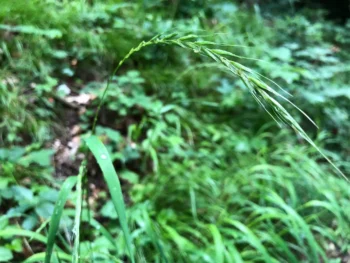
Bearded Wheatgrass: A Hardy Perennial Grass for Challenging Sites
Looking for a tough, no-fuss grass that can handle whatever your landscape throws at it? Meet bearded wheatgrass (Elymus caninus), a resilient perennial that’s earned its place in gardens across the Pacific Northwest. While this isn’t a native species, it has some interesting qualities that might make you want to give it a second look – or perhaps consider some native alternatives instead.
What Exactly is Bearded Wheatgrass?
Bearded wheatgrass is a perennial grass that forms attractive tufted clumps with arching, blue-green to gray-green foliage. The bearded part of its name comes from the distinctive awns (think of them as bristly whiskers) that extend from its nodding seed heads, giving the plant a delightfully shaggy appearance when it flowers.
You might also see this grass listed under its scientific synonyms Agropyron caninum or Triticum caninum in older gardening references, but Elymus caninus is the current accepted name.
Where Does It Come From?
Here’s where things get interesting from a native gardening perspective: bearded wheatgrass isn’t actually native to North America. This hardy grass originally hails from Europe and Asia, but it has established itself as a non-native species that reproduces on its own in parts of Oregon and Washington.
- Species observed
- No observations
Should You Plant Bearded Wheatgrass?
The short answer? It depends on what you’re trying to achieve in your garden. Bearded wheatgrass thrives in USDA hardiness zones 3-8, making it well-suited to cooler climates. Here are some scenarios where it might work well:
- Erosion control: Its spreading rhizomes help stabilize soil on slopes
- Difficult sites: It tolerates poor soils and challenging conditions where other plants struggle
- Low-maintenance areas: Once established, it pretty much takes care of itself
- Naturalized landscapes: Perfect for that wild meadow look
However, since this isn’t a native species, you might want to consider native alternatives like blue wildrye (Elymus glaucus) or Idaho fescue (Festuca idahoensis), which provide similar benefits while supporting local ecosystems.
Growing Conditions and Care
One of bearded wheatgrass’s biggest selling points is its adaptability. This grass has a facultative wetland status, meaning it’s equally happy in wet or dry conditions – talk about flexible! Here’s what it prefers:
- Light: Full sun to partial shade
- Soil: Adaptable to various soil types, including poor soils
- Water: Drought tolerant once established, but also handles moist conditions
- Maintenance: Very low – just cut back in late winter if desired
Wildlife and Ecosystem Benefits
As a grass, bearded wheatgrass is wind-pollinated, so it won’t be buzzing with bees and butterflies like your native wildflowers. However, it can provide some wildlife habitat and food for seed-eating birds. The dense clumps also offer shelter for small creatures.
That said, native grasses will always provide more comprehensive ecosystem benefits, supporting the full web of insects, birds, and other wildlife that have evolved alongside them.
The Bottom Line
Bearded wheatgrass is a practical choice for challenging sites where you need something tough and reliable. While it’s not native, it’s also not considered invasive or harmful. If you’re dealing with erosion issues, poor soil, or just need something bulletproof for a difficult spot, it could be worth considering.
But if you’re committed to native gardening (and we hope you are!), explore native grass alternatives first. Your local ecosystem will thank you, and you’ll still get that beautiful, naturalized look you’re after.