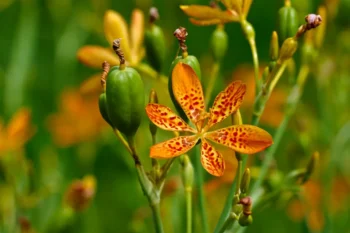
Understanding Belamcanda: A Garden Plant with a Complicated Identity
If you’ve stumbled across the name belamcanda in your gardening research, you might be scratching your head – and for good reason! This perennial plant has a bit of an identity crisis that’s worth understanding before you decide whether it belongs in your garden.
What Exactly Is Belamcanda?
Belamcanda is a perennial plant that falls into a somewhat complicated taxonomic situation. The genus name Belamcanda was historically used in botanical classification, but modern plant taxonomy has undergone significant changes. What many gardeners knew as Belamcanda species have largely been reclassified, making this particular genus name somewhat outdated in current botanical usage.
As a monocot (a plant with a single seed leaf), belamcanda would share characteristics with other familiar plants like lilies, irises, and grasses. However, without a specific species designation, it’s challenging to provide detailed growing information.
Native Status: Not From Around Here
Here’s what we do know: belamcanda is not native to North America. It’s classified as a non-native species that has been introduced and now reproduces spontaneously in the wild without human intervention. This means it has established itself and tends to persist across the lower 48 states and Puerto Rico.
Where You’ll Find It Growing
This adaptable plant has spread widely across the United States, establishing populations in Alabama, Arkansas, Connecticut, Delaware, District of Columbia, Florida, Georgia, Illinois, Indiana, Iowa, Kansas, Kentucky, Louisiana, Maryland, Michigan, Minnesota, Mississippi, Missouri, Nebraska, New Jersey, New York, North Carolina, Ohio, Oklahoma, Pennsylvania, South Carolina, South Dakota, Tennessee, Texas, Vermont, Virginia, West Virginia, Wisconsin, and Puerto Rico.
- Species observed
- No observations
Should You Plant Belamcanda?
This is where things get tricky. While belamcanda isn’t currently listed as invasive or noxious in the provided information, its non-native status and ability to reproduce spontaneously in the wild should give gardeners pause. Here are some considerations:
- It’s already established across most of the United States
- It reproduces without human assistance, suggesting it’s quite adaptable
- As a non-native species, it may not provide the same ecological benefits as native alternatives
The Native Alternative Approach
Instead of planting belamcanda, consider exploring native perennial options that will better support local wildlife and ecosystems. Native plants typically:
- Provide better habitat and food sources for local wildlife
- Are naturally adapted to local growing conditions
- Require less maintenance once established
- Support beneficial insects and pollinators that co-evolved with them
A Word of Caution About Identification
Given the taxonomic confusion surrounding the genus name Belamcanda, it’s important to be absolutely certain about plant identification before making any planting decisions. If you encounter plants labeled simply as Belamcanda without a species name, do additional research or consult with local native plant societies or extension services to understand exactly what you’re dealing with.
The Bottom Line
While belamcanda may have ornamental appeal as a perennial plant, its non-native status and widespread establishment suggest that gardeners focused on ecological responsibility might want to look elsewhere. The world of native perennials offers countless beautiful options that will serve both your garden’s aesthetic goals and support local ecosystems.
Before making any planting decisions, consider reaching out to your local native plant society or cooperative extension office. They can help you identify native alternatives that will thrive in your specific growing conditions while supporting the wildlife that calls your area home.