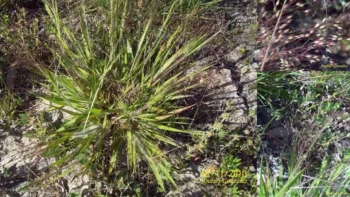
Berg’s Panicgrass: An Uncommon Grass with Limited Garden Appeal
If you’ve stumbled across the name Berg’s panicgrass (Panicum bergii), you’re likely looking at one of the lesser-known members of the vast grass family. This perennial grass has quietly established itself in parts of the southeastern United States, though it remains relatively obscure in both wild landscapes and garden settings.
What Is Berg’s Panicgrass?
Berg’s panicgrass is a perennial grass species that belongs to the same genus as many familiar native grasses like switchgrass. Originally from South America, this species has found its way to several southeastern states where it grows as an introduced plant that reproduces on its own in the wild.
You might also see this plant listed under its synonym Panicum pilcomayense in some older botanical references, though Panicum bergii is the accepted scientific name today.
Where Does It Grow?
Currently, Berg’s panicgrass has established populations in Alabama, Georgia, Louisiana, and Texas. It tends to favor wetland areas or places that are frequently moist, earning it a facultative wetland status in both the Atlantic and Gulf Coastal Plain and Great Plains regions. This means you’re most likely to encounter it near water sources, though it can occasionally pop up in drier spots too.
- Species observed
- No observations
Should You Plant Berg’s Panicgrass in Your Garden?
Here’s where things get a bit tricky. While Berg’s panicgrass isn’t listed as invasive or particularly problematic, there’s remarkably little information available about its garden performance, aesthetic qualities, or ecological benefits. This lack of documentation suggests it’s not a popular choice among gardeners or landscapers.
As a non-native species, Berg’s panicgrass doesn’t offer the same ecological benefits as our native grasses. Native plants have co-evolved with local wildlife over thousands of years, providing crucial food sources and habitat that introduced species simply can’t match.
Better Native Alternatives
If you’re drawn to ornamental grasses for your landscape, consider these fantastic native options instead:
- Switchgrass (Panicum virgatum) – A stunning native relative with excellent wildlife value
- Little bluestem (Schizachyrium scoparium) – Beautiful fall color and bird-friendly seed heads
- Gulf muhly (Muhlenbergia capillaris) – Gorgeous pink plumes in fall
- Inland sea oats (Chasmanthium latifolium) – Unique flat seed heads and shade tolerance
Growing Conditions (What We Know)
Based on its wetland status and current distribution, Berg’s panicgrass likely prefers:
- Moist to wet soil conditions
- Areas with consistent moisture
- Warm, humid climates typical of the southeastern United States
However, specific details about soil pH preferences, sun requirements, mature size, and care needs remain largely undocumented in horticultural literature.
The Bottom Line
While Berg’s panicgrass isn’t necessarily a bad plant, it’s not particularly compelling for garden use either. With so many spectacular native grass options available that provide real benefits to local ecosystems, there’s little reason to seek out this relatively unknown introduced species.
If you’re interested in adding grasses to your landscape, stick with well-documented native species that will support local wildlife while providing proven garden performance. Your local pollinators, birds, and beneficial insects will thank you for choosing plants they’ve evolved alongside.
Sometimes the most responsible gardening choice is simply to pass on the unfamiliar in favor of the tried, true, and locally beneficial.