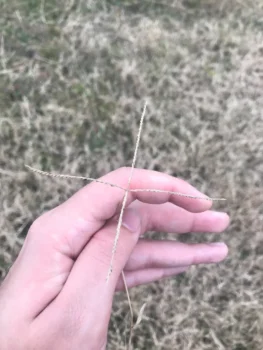
Bermudagrass: Why This Aggressive Spreader Might Not Be Right for Your Garden
If you’ve been considering Bermudagrass (Cynodon dactylon) for your landscape, hold on just a minute! While this perennial grass might seem like an attractive option for its durability and rapid growth, there’s more to this story than meets the eye. Let’s dive into what makes this grass tick and why you might want to think twice before inviting it into your garden.
What Is Bermudagrass?
Bermudagrass is a warm-season perennial grass that’s become ubiquitous across much of North America, despite not being native to the continent. This fine-textured, low-growing grass forms dense mats through an aggressive network of above-ground runners (stolons) and underground stems (rhizomes). It’s also known by the scientific name Cynodon dactylon, and you might occasionally see it referred to as manienie in some regions.
Where Does Bermudagrass Grow?
Originally native to Africa, Europe, Asia, and Australia, Bermudagrass has established itself as a non-native species across an impressive range in North America. You’ll find it growing in Alabama, Arizona, Arkansas, California, Colorado, Connecticut, Delaware, Florida, Georgia, Hawaii, Idaho, Illinois, Indiana, Iowa, Kansas, Kentucky, Louisiana, Maryland, Massachusetts, Michigan, Mississippi, Missouri, Montana, Nebraska, Nevada, New Hampshire, New Jersey, New Mexico, New York, North Carolina, Ohio, Oklahoma, Oregon, Pennsylvania, South Carolina, Tennessee, Texas, Utah, Virginia, Washington, West Virginia, and various U.S. territories including Puerto Rico and the Virgin Islands.
- Species observed
- No observations
The Problem with Bermudagrass
Here’s where things get interesting (and a bit concerning). Bermudagrass isn’t just non-native—it’s been classified as a noxious weed in some areas, with restricted seed status in certain regions. This classification exists for good reason: this grass is an incredibly aggressive spreader that can quickly take over your garden and beyond.
What makes it particularly troublesome is its allelopathic nature, meaning it actually produces chemicals that inhibit the growth of other plants around it. So not only does it spread rapidly through its extensive root and runner system, but it also actively suppresses your other garden plants!
Growth Characteristics
If you’re wondering why Bermudagrass is so successful at taking over, here are the facts:
- Rapid growth rate with active growing periods in spring, summer, and fall
- Reaches a mature height of about 1.4 feet
- Spreads aggressively through both stolons and rhizomes
- Forms a prostrate, mat-like growth pattern
- Highly drought tolerant once established
- Thrives in USDA hardiness zones 7-10
Growing Conditions
Bermudagrass is remarkably adaptable, which partly explains its widespread distribution:
- Soil: Adapts to coarse, medium, and fine-textured soils
- pH tolerance: 5.0 to 8.0
- Sun exposure: Full sun (shade intolerant)
- Water needs: High moisture use but drought tolerant
- Temperature: Can survive down to -8°F
- Salt tolerance: High
- Minimum frost-free days: 160
Wildlife and Ecological Impact
While Bermudagrass does provide some wildlife benefits, they’re quite limited. Large animals, small mammals, and water birds use it sparingly—comprising only 2-5% of their diet for most species, with water birds getting slightly more benefit at 5-10%. However, these minimal benefits don’t offset its negative ecological impact as an aggressive non-native species.
As a wind-pollinated grass, Bermudagrass offers virtually no benefits to pollinators like bees and butterflies, which are already under stress and need all the help they can get from flowering native plants.
Why You Should Think Twice
Given its non-native status, aggressive spreading habit, allelopathic properties, and noxious weed classification in some areas, we strongly recommend against planting Bermudagrass in your garden or landscape. Once established, it’s incredibly difficult to control or remove, and it can easily escape into natural areas where it displaces native plant communities.
Better Native Alternatives
Instead of Bermudagrass, consider these native alternatives that will provide better ecological benefits while still meeting your landscaping needs:
- Native prairie grasses appropriate for your region
- Local sedge species for low-maintenance areas
- Regional wildflower and native grass mixes
- Native groundcovers suited to your specific climate zone
The Bottom Line
While Bermudagrass might seem appealing for its durability and rapid establishment, its aggressive nature and non-native status make it a poor choice for environmentally conscious gardeners. Instead, invest in native alternatives that will support local wildlife, maintain ecological balance, and still provide the ground coverage you’re looking for—just without the invasive headaches that come with Bermudagrass.
Your local native plant society or extension office can help you identify the best native grass alternatives for your specific region and growing conditions. Trust us, your garden (and your local ecosystem) will thank you!