Big Trefoil: A European Ground Cover That’s Made Itself at Home
If you’re looking for a tough, low-maintenance ground cover that can handle wet feet and poor soil, big trefoil (Lotus pedunculatus) might catch your eye. This European native has quietly established itself across North America, from the soggy meadows of the Pacific Northwest to the coastal plains of Florida. But before you rush to plant it, let’s dig into what makes this little legume tick – and whether it deserves a spot in your garden.
What Is Big Trefoil?
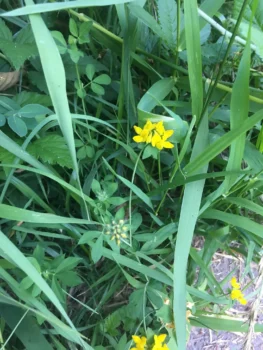
Big trefoil goes by several names, including greater bird’s-foot trefoil and loto de los pantanos in Spanish-speaking regions. Don’t let the big in its name fool you – this perennial forb stays relatively low to the ground, spreading outward rather than shooting skyward. It’s a member of the pea family, which means it has that classic three-leaflet structure (hence trefoil) and produces charming yellow flowers that look like tiny sweet peas.
You might also encounter this plant under its scientific synonyms: Lotus decumbens, Lotus uliginosus, or Lotus pedunculatus var. villosus. Plant taxonomists love to keep us on our toes!
Where You’ll Find Big Trefoil
Originally from Europe and the Mediterranean, big trefoil has made itself quite comfortable across much of North America. You’ll find it growing in British Columbia, Manitoba, New Brunswick, Nova Scotia, Ontario, Quebec, California, Florida, Hawaii, Idaho, Illinois, Oregon, and Washington. It’s what botanists call a naturalized species – meaning it reproduces on its own in the wild without human help and has decided to stick around.
- Species observed
- No observations
The Garden Appeal (Or Lack Thereof)
Let’s be honest – big trefoil isn’t going to win any beauty contests. Its small yellow flowers are pleasant enough, blooming in clusters from late spring through summer, but they’re not showstoppers. The real appeal lies in its practicality. This plant is tough as nails, tolerating wet soils that would make other plants throw in the trowel. It’s particularly useful for:
- Erosion control on slopes and banks
- Ground cover in persistently damp areas
- Naturalized meadow plantings
- Areas where you want something green but don’t want to fuss with maintenance
Growing Conditions and Care
Big trefoil thrives in USDA hardiness zones 6-9, though it can sometimes survive in slightly colder areas with protection. It’s classified as facultative to facultative upland for wetland status, which is plant-speak for I like moisture but won’t complain if things dry out occasionally.
Here’s what this European transplant prefers:
- Soil: Moist to wet conditions, tolerates poor drainage and clay soils
- Light: Full sun to partial shade
- pH: Adaptable to various soil pH levels
- Maintenance: Minimal once established
Planting and Propagation
Big trefoil is remarkably easy to grow – perhaps too easy. It self-seeds readily and can spread more enthusiastically than some gardeners appreciate. If you decide to plant it, scatter seeds in early spring or fall in prepared soil. Keep the area moist until seedlings establish, then step back and let nature take its course.
Fair warning: this plant can be aggressive. What starts as a small patch can quickly become a large colony, so consider whether that’s what you want before planting.
Wildlife and Pollinator Benefits
Like other legumes, big trefoil fixes nitrogen in the soil, which can benefit surrounding plants. Its flowers attract bees and other small pollinators, providing nectar throughout the growing season. As a member of the pea family, it may also serve as food for certain butterfly caterpillars, though it’s not considered a major wildlife plant.
The Native Plant Perspective
Here’s where we need to have an honest conversation. While big trefoil isn’t currently listed as invasive or noxious, it is a non-native species that can spread aggressively. If you’re committed to supporting local ecosystems with native plants, there are better options.
Consider these native alternatives instead:
- Wild bergamot (Monarda fistulosa): Beautiful purple flowers, beloved by pollinators
- Blue flag iris (Iris versicolor): Stunning flowers for wet areas
- Swamp milkweed (Asclepias incarnata): Essential for monarch butterflies
- Cardinal flower (Lobelia cardinalis): Brilliant red blooms that hummingbirds adore
The Bottom Line
Big trefoil is like that reliable but unremarkable friend – not particularly exciting, but dependable when you need it. It’s perfect for problem areas where nothing else wants to grow, especially if you need quick erosion control or ground cover in wet spots. Just be aware that it’s not native to North America and can spread beyond where you originally planted it.
If you’re focused on creating habitat for native wildlife and supporting local ecosystems, you’ll probably want to skip big trefoil in favor of native alternatives. But if you have a challenging wet spot that needs coverage and you’re not concerned about using non-native species, this tough little European could be just the ticket.
Remember, every garden is different, and sometimes the perfect plant is simply the one that thrives where you need it most. Whether that’s big trefoil or a native alternative is ultimately up to you and your garden’s specific needs.