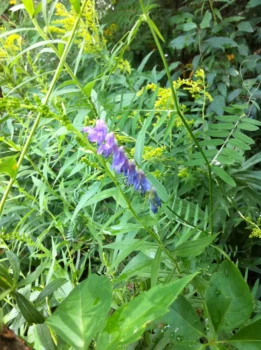
Bird Vetch: A Beautiful but Problematic Non-Native Groundcover
If you’ve ever noticed cascading purple flowers sprawling across roadsides or abandoned lots, you’ve likely encountered bird vetch (Vicia cracca). This perennial herb might look charming with its delicate pea-like blooms, but there’s more to this plant than meets the eye. Let’s dive into what makes bird vetch both appealing and concerning for North American gardeners.
What is Bird Vetch?
Bird vetch is a climbing and trailing perennial herb that belongs to the legume family. As a forb, it lacks the woody tissue that defines shrubs and trees, instead producing soft, herbaceous growth that dies back seasonally while the root system persists year after year. The plant produces attractive purple flowers arranged in dense, elongated clusters that bloom from late spring into summer.
A Plant Out of Place
Here’s where things get complicated: bird vetch isn’t native to North America. Originally from Europe and Asia, this plant has established itself across an impressive range of North American territories and states, from Alaska and Canada down through the lower 48 states, and even in Hawaii and Greenland.
Bird vetch now grows wild across most of the United States and Canada, including: Alberta, Alabama, British Columbia, Alaska, Manitoba, New Brunswick, Arkansas, California, Nova Scotia, Ontario, Prince Edward Island, Connecticut, Quebec, Delaware, Saskatchewan, Yukon, Northwest Territories, Georgia, Nunavut, Hawaii, Idaho, Illinois, Indiana, Iowa, Kentucky, Maine, Maryland, Massachusetts, Michigan, Minnesota, Missouri, Montana, New Hampshire, New Jersey, New York, North Carolina, Ohio, Oregon, Pennsylvania, Rhode Island, South Dakota, Tennessee, Utah, Vermont, Virginia, Washington, West Virginia, Wisconsin, Wyoming, Labrador, and Newfoundland.
- Species observed
- No observations
The Problem with Bird Vetch
While bird vetch might seem like an attractive groundcover option, it comes with significant concerns. In Alaska, it’s officially classified as a restricted noxious weed, meaning its spread is considered harmful enough to warrant legal restrictions. The plant’s ability to reproduce and persist without human intervention across such a vast range demonstrates its aggressive colonizing nature.
This adaptability that makes bird vetch successful also makes it problematic for native ecosystems. It can outcompete native plants and alter the natural balance of local plant communities.
What Bird Vetch Looks Like
Bird vetch is relatively easy to identify once you know what to look for:
- Height reaches about 1.5 feet, though it often trails along the ground or climbs supports
- Growth habit is decumbent (trailing with upturned tips) and rhizomatous
- Fine-textured, compound leaves with a delicate appearance
- Purple flowers in dense, showy clusters during late spring
- Black seeds that follow the flowers in summer
- Green foliage that provides moderate summer coverage
Growing Conditions and Hardiness
Part of what makes bird vetch so successful (and concerning) is its remarkable adaptability to various growing conditions:
- Thrives in USDA hardiness zones 3-8, tolerating temperatures as low as -33°F
- Adapts to coarse, medium, and fine-textured soils
- Highly drought tolerant once established
- Low fertility requirements
- Tolerates pH ranges from 4.9 to 7.0
- Handles both full sun and partial shade conditions
- Fixes nitrogen in the soil, reducing its need for fertilizer
Our Recommendation
Given bird vetch’s non-native status and classification as a noxious weed in Alaska, we strongly recommend against planting this species in your garden. While it may seem attractive and low-maintenance, choosing this plant contributes to the displacement of native species and can create management headaches if it spreads beyond your intended planting area.
Native Alternatives to Consider
Instead of bird vetch, consider these native alternatives that provide similar benefits without the ecological concerns:
- Wild bergamot (Monarda fistulosa) for purple flowers and pollinator attraction
- Native lupines (Lupinus species) for nitrogen fixation and purple blooms
- American groundnut (Apios americana) for climbing habit and attractive flowers
- Native vetches like American vetch (Vicia americana) where appropriate
By choosing native plants, you’ll create habitat for local wildlife while maintaining the aesthetic appeal you’re looking for, all without contributing to the spread of problematic non-native species. Your local native plant society or extension office can help you identify the best native options for your specific region and growing conditions.