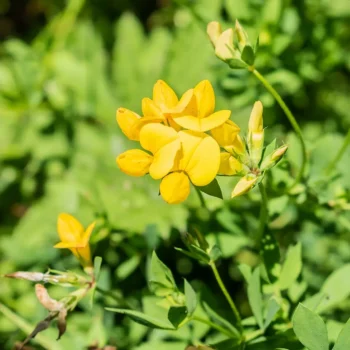
Bird’s-Foot Trefoil: A Spreading Ground Cover You Might Want to Skip
Bird’s-foot trefoil (Lotus corniculatus) might catch your eye with its cheerful yellow flowers and low-maintenance reputation, but before you add this perennial to your garden, there’s more to the story. This European import has made itself quite at home across North America – perhaps a little too much at home for comfort.
What is Bird’s-Foot Trefoil?
Also known simply as birdsfoot trefoil, this sprawling perennial herb gets its quirky name from the distinctive shape of its seed pods, which spread out like tiny bird feet. Growing up to 2.4 feet tall with a semi-erect, spreading growth habit, it produces clusters of bright yellow pea-like flowers from spring through summer. The fine-textured green foliage creates a moderate density mat that stays relatively low to the ground.
Where You’ll Find It Growing
Originally from Europe, Asia, and North Africa, bird’s-foot trefoil has established itself across virtually all of North America. You can find it growing wild from Alberta to Alabama, from British Columbia to New Brunswick, and everywhere in between – including all lower 48 states plus most Canadian provinces and territories.
- Species observed
- No observations
The Invasive Species Alert
Here’s where things get concerning: bird’s-foot trefoil is considered invasive in Missouri and is on the watch list in Delaware. This non-native species reproduces spontaneously and tends to persist without human help, which means it can crowd out native plants that local wildlife depends on. While it’s not classified as invasive everywhere, its aggressive spreading nature makes it a risky choice for responsible gardeners.
Growing Conditions and Care
If you’re still considering this plant despite its invasive tendencies, here’s what it needs:
- USDA Hardiness Zones: 3-9
- Sunlight: Full sun (shade intolerant)
- Soil: Adapts to coarse, medium, and fine-textured soils
- pH: 5.0 to 8.0 (quite tolerant)
- Water: Medium moisture needs with medium drought tolerance
- Fertility: Medium requirements
Bird’s-foot trefoil is remarkably adaptable, tolerating everything from salty soils to temperatures as low as -43°F. It fixes nitrogen in the soil and establishes easily from seed, with about 369,840 seeds per pound. The plant has a moderate growth rate and typically requires at least 90 frost-free days.
Wildlife and Pollinator Value
On the positive side, this plant does provide some wildlife benefits. Large animals and terrestrial birds include it as 5-10% of their diet, though they don’t typically use it for cover. The yellow flowers attract bees, butterflies, and other pollinators throughout the blooming season from early spring through summer.
Landscape Role and Design Uses
Bird’s-foot trefoil works as:
- Ground cover for large areas
- Erosion control on slopes
- Naturalized meadow plantings
- Low-maintenance landscape areas
However, its tendency to spread aggressively and lack of significant fall or winter interest limit its appeal in designed landscapes.
Better Native Alternatives
Instead of risking the ecological impact of bird’s-foot trefoil, consider these native alternatives that provide similar benefits:
- Wild bergamot (Monarda species) – Native groundcover with pollinator appeal
- Prairie clover (Dalea species) – Nitrogen-fixing native legumes
- Wild lupine (Lupinus perennis) – Another nitrogen-fixing native with attractive flowers
- Native sedges – Excellent for erosion control and wildlife habitat
The Bottom Line
While bird’s-foot trefoil might seem like an easy, low-maintenance choice, its invasive potential and aggressive spreading habit make it a poor choice for responsible gardeners. With so many beautiful native alternatives available that provide better wildlife habitat without the ecological risks, it’s worth skipping this European import in favor of plants that truly belong in our landscapes. Your local ecosystems – and the wildlife that depends on them – will thank you.