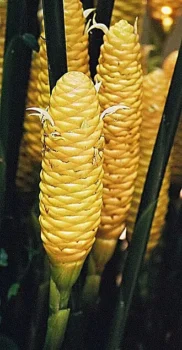
Bitter Ginger: A Tropical Beauty with Showy Red Bracts
If you’ve ever dreamed of adding a touch of tropical paradise to your garden, bitter ginger (Zingiber zerumbet) might catch your eye. This striking perennial herb produces some of the most eye-catching flower displays in the ginger family, with cone-shaped bracts that transform from green to brilliant red as they mature.
What Makes Bitter Ginger Special?
Bitter ginger is a fascinating plant that belongs to the same family as culinary ginger, though it’s grown primarily for ornamental purposes rather than cooking. The plant’s most remarkable feature is its cone-shaped inflorescence – what looks like a flower is actually a collection of colorful bracts that house the tiny true flowers inside.
These bracts start out green and gradually turn a stunning coral-red color when mature. Here’s where it gets really interesting: the mature bracts fill with a clear, fragrant liquid that has earned this plant the nickname shampoo ginger in some regions. The liquid was traditionally used for hair care, though it has a bitter taste – hence the common name bitter ginger.
Native Status and Geographic Distribution
While bitter ginger adds undeniable tropical flair to gardens, it’s important to know that this species is not native to the United States. Originally from Southeast Asia (particularly Malaysia and Indonesia), Zingiber zerumbet has been introduced and now grows wild in several U.S. locations including Florida, Hawaii, Puerto Rico, and some Pacific territories like Guam and Palau.
The plant has established itself as a naturalized species in these warm climates, reproducing on its own without human intervention.
- Species observed
- No observations
Should You Grow Bitter Ginger?
The decision to grow bitter ginger comes down to your gardening goals and local climate. Here are some considerations:
Reasons You Might Love It:
- Stunning ornamental value with unique red cone-shaped bracts
- Relatively low maintenance once established
- Adds exotic tropical appeal to landscapes
- Can grow in both wetland and non-wetland conditions
- Works well in containers for cooler climates
Things to Consider:
- It’s non-native and can spread in suitable climates
- Limited wildlife and pollinator benefits compared to native alternatives
- Requires warm, humid conditions to thrive
- May go dormant or die back in cooler weather
Growing Conditions and Care
If you decide to grow bitter ginger, success depends on mimicking its preferred tropical environment:
Climate Requirements:
- USDA Hardiness Zones 9-11 for year-round outdoor growing
- Can be grown as an annual or container plant in cooler zones
- Prefers warm, humid conditions
Light and Soil:
- Partial shade to filtered sunlight works best
- Well-draining but consistently moist soil
- Rich, organic soil with good fertility
- Can tolerate both wetland and upland conditions
Planting and Care Tips:
- Plant rhizomes in spring after soil warms
- Keep soil consistently moist but not waterlogged
- Provide shelter from strong winds
- Mulch around plants to retain moisture
- In cooler zones, dig up rhizomes before first frost and store indoors
Landscape Design Ideas
Bitter ginger works beautifully in tropical and subtropical garden designs. Its bold foliage and striking bracts make it an excellent specimen plant or focal point. Consider using it in:
- Tropical garden borders
- Shaded woodland gardens with consistent moisture
- Container gardens on patios or decks
- Rain gardens or areas with seasonal moisture
Native Alternatives to Consider
While bitter ginger certainly has its charms, consider these native alternatives that provide similar tropical appeal while supporting local ecosystems:
- Wild ginger species native to your region
- Native flowering perennials with bold foliage
- Regional native plants that thrive in similar moist, shaded conditions
The Bottom Line
Bitter ginger is undeniably beautiful and can be a stunning addition to the right garden setting. If you live in a warm climate where it can thrive, and you’re drawn to its unique ornamental qualities, it can be grown successfully with proper care. Just remember to be mindful of its non-native status and consider how it fits into your broader gardening philosophy.
Whether you choose to grow bitter ginger or opt for native alternatives, the key is creating a garden that brings you joy while being a responsible steward of your local environment. Happy gardening!