Non-native Plants

Black Bamboo

Phyllostachys nigra

USDA symbol: PHNI80

perennial subshrub

Hawaii: non-native, naturalized
Lower 48 states: non-native, naturalized

If you’re looking to add some serious drama to your garden, black bamboo (Phyllostachys nigra) might just be the showstopper you’ve been searching for. With its striking ebony-colored stems and graceful arching form, this non-native beauty has been captivating gardeners across the United States for decades. Black bamboo isn’t your ...

Black Bamboo: The Dramatic Non-Native That’s Stealing the Show

If you’re looking to add some serious drama to your garden, black bamboo (Phyllostachys nigra) might just be the showstopper you’ve been searching for. With its striking ebony-colored stems and graceful arching form, this non-native beauty has been captivating gardeners across the United States for decades.

What Makes Black Bamboo Special?

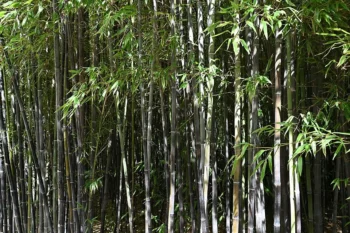
Black bamboo isn’t your average backyard plant. Originally hailing from China, this perennial grass-like plant (technically called a graminoid) develops its signature jet-black culms over time. Here’s the cool part: those stems start out green and gradually transform into their dramatic black color over 2-3 years. It’s like watching nature’s own time-lapse photography in your garden!

Where You’ll Find It Growing

As a non-native species, black bamboo has established itself in several states across the country, including Georgia, Hawaii, South Carolina, Tennessee, Texas, Virginia, and West Virginia. It reproduces naturally in these areas and has shown it can persist without human intervention.

  • Species observed
  • No observations

The Good, The Bad, and The Beautiful

Let’s be honest about what you’re getting into with black bamboo:

Why Gardeners Love It:

  • Stunning visual impact with those glossy black stems
  • Fast growth rate for quick privacy screening
  • Architectural quality that works in modern landscapes
  • Excellent for Asian-inspired garden designs
  • Can be grown in containers to control spread

What to Consider:

  • Spreads via underground rhizomes and needs containment
  • As a non-native species, it doesn’t support local ecosystems like native plants do
  • Can become aggressive if not properly managed
  • Limited wildlife and pollinator benefits

Growing Black Bamboo Successfully

If you decide to give black bamboo a try, here’s how to keep it happy and under control:

Growing Conditions:

  • USDA Hardiness Zones: 7-10
  • Light: Partial shade to full sun
  • Soil: Well-draining, consistently moist
  • Wetland status: Facultative Upland (usually grows in non-wetland areas)

Planting and Care Tips:

  • Install root barriers or plant in large containers to prevent spreading
  • Water regularly, especially during dry spells
  • Apply balanced fertilizer annually in spring
  • Thin out older culms every few years to maintain appearance
  • Mulch around the base to retain moisture and suppress weeds

Native Alternatives to Consider

While black bamboo is undeniably striking, consider these native alternatives that provide similar benefits while supporting local wildlife:

  • River cane (Arundinaria gigantea) – North America’s only native bamboo
  • Giant cane (Arundinaria tecta) – Another native bamboo species
  • Native ornamental grasses like big bluestem or switchgrass for vertical interest

The Bottom Line

Black bamboo is a stunning ornamental that can add serious wow-factor to your landscape. While it’s not native and requires careful management to prevent unwanted spread, it’s not currently listed as invasive or noxious. If you love the look and are committed to responsible containment, it can be a beautiful addition to your garden. Just remember to consider native alternatives that might provide similar aesthetic benefits while supporting your local ecosystem.

Whether you choose black bamboo or a native alternative, the key is thoughtful planning and responsible gardening practices that benefit both your landscape and the environment around you.

Phyllostachys nigra is also known as...

Often we refer to plants by their common names. When shopping for plants the scientific name is the best way to positively identify the plant species you desire. But some plants have more than one name! While it doesn't happen often, nurseries might display one name while you're searching for another. Phyllostachys nigra is also known as:

Phyllostachys henionis | USDA symbol: PHHE14
Phyllostachys nigra Munro var. henionis Stapf ex | USDA symbol: PHNIH2

Why do some plants have more than one name? Over time plant species may be renamed for a few reasons:

  1. Botanists in different regions named the same plant without knowing it had already been classified.
  2. A species was reclassified after scientific advances in, for example, DNA analysis.
  3. Slight variations within a species are sometimes mistakenly identified as entirely new species.

Wetland Status

The rule of seasoned gardeners and landscapers is to choose the "right plant for the right place" — matching plants to their ideal growing conditions, so they'll thrive with less care and fewer inputs. But the simplicity of this catchphrase conceals how tricky plant selection can be if you don't have the right information. While tags on nursery plants list watering requirements, there's more to the story.

Knowing a plant's wetland status can simplify the process by revealing the interaction between plants, water, and soil. You might be surprised to learn that popular landscape plants are wetland species! And what may be a wetland plant in one area, in another it might thrive in drier conditions. The table below gives insight into the preferred growing conditions of this plant throughout its geographical distribution.

Region
Preferred Habitat

Atlantic and Gulf Coastal Plain (AL, AR, DC, DE, FL, GA, IL, KY, LA, MD, MS, MO, NC, NJ, OK, PA, SC, TN, TX, VA)

Facultative Upland

Eastern Mountains and Piedmont (AL, AR, DC, DE, GA, IL, IN, KS, KY, MD, MO, NC, NJ, NY, OH, OK, PA, SC, TN, VA, WV)

Facultative Upland

Great Plains (CO, KS, MN, MT, NE, NM, ND, OK, SD, TX, WY)

Facultative Upland

Hawaii ()

Facultative Upland
Wetland Glossary
Obligate Wetland
Facultative Wetland
Facultative
Facultative Upland
Obligate Upland
Almost always occurs in wetlands
Usually occurs in wetlands but may occur in non-wetlands
Can occur in wetlands and non-wetlands
Usually occurs in non-wetlands but may occur in wetlands
Almost never occurs in wetlands

Classification

Group: Monocot
Kingdom: Plantae - Plants
Subkingdom: Tracheobionta - Vascular plants
Superdivision: Spermatophyta - Seed plants
Division: Magnoliophyta - Flowering plants
Class: Liliopsida - Monocotyledons
Subclass: Commelinidae
Order: Cyperales
Family: Poaceae Barnhart - Grass family
Genus: Phyllostachys Siebold & Zucc. - bamboo

Species: Phyllostachys nigra (Lodd. ex Lindl.) Munro - black bamboo

Plant data source: USDA, NRCS 2025. The PLANTS Database. https://plants.usda.gov,. 2/25/2025. National Plant Data Team, Greensboro, NC USA