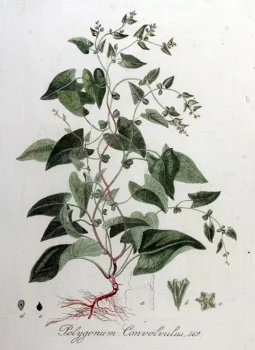
Black Bindweed: Why This Climbing Weed Doesn’t Belong in Your Garden
If you’ve spotted a twining, climbing plant with heart-shaped leaves scrambling through your garden beds, you might be dealing with black bindweed (Polygonum convolvulus). While some climbing plants make wonderful garden additions, this particular species is one you’ll definitely want to remove rather than encourage.
What is Black Bindweed?
Black bindweed is an annual forb that behaves more like a climbing vine, wrapping itself around other plants and structures as it grows. Despite its common name, it’s not actually related to true bindweeds (Convolvulus species). This non-native plant originally hails from Europe and Asia but has made itself quite at home across North America – perhaps a little too at home.
Where You’ll Find Black Bindweed
This adaptable annual has spread extensively across the continent. You can find black bindweed growing wild in all 50 US states, throughout Canada from coast to coast, and even in Alaska, Hawaii, and Greenland. It’s particularly common in agricultural areas, disturbed soils, waste places, and unfortunately, home gardens.
- Species observed
- No observations
Why You Shouldn’t Plant Black Bindweed
Here’s the thing about black bindweed – it’s considered a noxious weed in Alaska with restricted status, and for good reason. This aggressive annual can quickly take over garden spaces and agricultural areas. While it may not be officially listed as invasive everywhere, its weedy nature and rapid spread make it a problematic plant that most gardeners will want to avoid.
Key concerns include:
- Aggressive climbing habit that smothers desirable plants
- Rapid growth and prolific seed production
- Difficult to control once established
- Minimal ornamental or ecological value
Identifying Black Bindweed
Knowing what to look for can help you spot and remove black bindweed before it becomes a bigger problem:
- Heart-shaped to arrow-shaped leaves
- Twining stems that climb counterclockwise
- Small, inconspicuous greenish-white flowers
- Annual growth habit (dies back each winter)
- Can reach 3-4 feet in length
Growing Conditions (What to Expect)
Black bindweed is frustratingly adaptable, which contributes to its weedy success. It thrives in:
- USDA hardiness zones 3-10
- Disturbed soils and agricultural areas
- Both sunny and partially shaded locations
- Various soil types, though it prefers well-drained conditions
- Areas with moderate moisture, though it’s quite drought tolerant
Management and Removal
Since we don’t recommend planting black bindweed, let’s focus on how to manage it if it appears:
- Hand-pull young plants before they set seed
- Cut back climbing stems before flowers develop
- Maintain healthy, dense plantings to reduce open spaces for establishment
- Consider pre-emergent herbicides in severely affected areas
Better Alternatives for Your Garden
If you’re looking for climbing plants with similar vigor but better behavior, consider these native alternatives depending on your region:
- Wild ginger (Asarum canadense) for groundcover
- American groundnut (Apios americana) for climbing
- Wild bean species native to your area
- Native morning glories (Ipomoea species)
The Bottom Line
While black bindweed might seem harmless with its small flowers and climbing habit, it’s a plant that’s better appreciated from a distance – preferably someone else’s field! Focus your gardening energy on native climbing plants that provide better wildlife value and won’t risk becoming weedy problems in your landscape. Your garden (and your neighbors) will thank you for it.