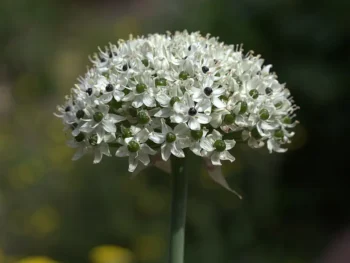
Black Garlic: A Striking Non-Native Addition to Your Garden
If you’re looking for a plant that makes a bold statement in your garden, black garlic (Allium nigrum) might catch your eye. This Mediterranean native has found its way into Pacific Northwest gardens, where it’s established itself as a reliable, if non-native, perennial option.
What Exactly Is Black Garlic?
Don’t let the name fool you – this isn’t the fermented culinary ingredient you might be thinking of! Black garlic is actually a striking member of the onion family that gets its common name from the dark centers of its white, star-shaped flowers. Botanically known as Allium nigrum (with the synonym Allium multibulbosum), this perennial forb produces dramatic flower clusters that can reach 2 to 4 feet tall.
As a forb, black garlic lacks significant woody tissue and dies back to ground level each winter, re-emerging from underground bulbs each spring. It’s what gardeners call a true bulb – think of it as nature’s own little storage unit that helps the plant survive through tough times.
Where You’ll Find It Growing Wild
Black garlic isn’t native to North America – it originally hails from the Mediterranean region, particularly Turkey and surrounding areas. However, it has established itself in parts of Oregon and Washington, where it reproduces on its own and persists without human intervention.
- Species observed
- No observations
The Garden Appeal
What makes black garlic interesting for gardeners? Those eye-catching flower clusters are hard to ignore. In late spring to early summer, tall stems shoot up bearing spherical clusters of white flowers, each with a distinctive dark center that creates a stunning contrast. The flowers are excellent for cutting and add architectural interest to any garden bed.
The plant thrives in USDA hardiness zones 6-9, making it well-suited for much of the Pacific Coast and beyond.
Where Black Garlic Fits in Your Landscape
This Mediterranean transplant works beautifully in several garden styles:
- Xeriscape and drought-tolerant gardens
- Mediterranean-themed landscapes
- Cottage garden mixed borders
- Naturalized areas where you want dramatic vertical interest
Its height makes it perfect as a specimen plant or for adding structure to the back of perennial borders. The flowers are also magnets for bees and other beneficial pollinators.
Growing Black Garlic Successfully
The good news? Black garlic is relatively low-maintenance once you understand its needs:
Sunlight and Soil: Plant it in full sun with well-draining soil. It’s quite tolerant of poor soils and actually prefers not to be pampered – rich, moist conditions can lead to problems.
Planting: Set bulbs in the ground during fall, about 4-6 inches deep. Space them roughly 6-8 inches apart if you’re planting multiples.
Water Needs: Once established, black garlic is quite drought-tolerant. Water moderately during the growing season, but don’t overdo it.
Maintenance: Let the foliage die back naturally after flowering – this feeds the bulb for next year’s show. Every 3-4 years, you can divide overcrowded clumps in fall.
Should You Plant Black Garlic?
Here’s where it gets interesting from a native gardening perspective. While black garlic isn’t invasive or particularly problematic, it is a non-native species that has naturalized in some areas. If you’re committed to supporting native ecosystems, you might want to consider native alternatives that provide similar benefits.
Some native options to consider instead include nodding onion (Allium cernuum) or other native alliums that support local pollinators and wildlife in ways that non-native species simply can’t match.
That said, if you do choose to grow black garlic, it’s relatively well-behaved and shouldn’t cause ecological problems in most garden settings. Just be mindful that as a non-native species, it won’t provide the same level of support to local wildlife as native plants would.
The Bottom Line
Black garlic offers undeniable visual appeal and is quite easy to grow if you can provide the right conditions. While it’s not a native choice, it’s also not considered invasive or problematic. Whether you choose to include it in your garden depends on your priorities – if you’re focused on supporting native ecosystems, there are better options. But if you’re looking for a striking, low-maintenance perennial that pollinators enjoy, black garlic might earn a spot in your landscape.