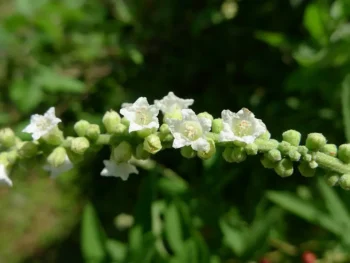
Black Sage: A Fragrant Addition to Your Southern Garden
If you’re looking for a low-maintenance shrub that can handle Florida’s heat and humidity while providing year-round interest, black sage (Cordia curassavica) might catch your eye. Also known as stringbush, this perennial shrub brings a touch of the tropics to southern landscapes with its fragrant white flowers and glossy dark berries.
What is Black Sage?
Black sage is a multi-stemmed woody shrub that typically grows 13 to 16 feet tall, though it can sometimes reach greater heights or develop a more tree-like form depending on growing conditions. Don’t let the name fool you – this isn’t the culinary sage you might know from your herb garden, but rather a member of the borage family with its own unique charm.
Where Does It Come From?
Here’s where things get interesting: black sage isn’t actually native to the United States. This Caribbean and Central American native has made itself at home in Florida, where it now reproduces spontaneously in the wild. While it’s established itself as part of the local landscape, it’s important to know that you’re planting a non-native species.
- Species observed
- No observations
Why Consider Black Sage for Your Garden?
Black sage offers several appealing qualities that make it worth considering:
- Fragrant white flowers that bloom in small clusters
- Attractive dark berries that follow the flowers
- Drought tolerance once established
- Low maintenance requirements
- Attracts pollinators like bees and butterflies
- Heat and humidity tolerance
Garden Design and Landscaping Uses
Black sage works well in several landscape scenarios. You can use it as an informal hedge, plant it as a specimen shrub, or incorporate it into naturalized areas. It’s particularly suited for coastal gardens and xerophytic (dry) landscapes where water conservation is important. The shrub fits well in informal garden settings where a more relaxed, tropical feel is desired.
Growing Conditions and Care
One of black sage’s best qualities is how easy-going it is. Here’s what it prefers:
- Sunlight: Full sun to partial shade
- Soil: Well-draining soils (it’s not picky about soil type)
- Water: Regular water when young, drought tolerant once established
- Climate: USDA hardiness zones 9b through 11
Planting and Care Tips
Getting black sage established is refreshingly straightforward:
- Plant in spring after the last frost
- Water regularly during the first growing season
- Once established, it requires minimal supplemental watering
- Prune after flowering if desired to maintain shape
- Generally pest and disease resistant
Wildlife and Pollinator Benefits
The fragrant flowers of black sage are a hit with pollinators, particularly bees and butterflies. This makes it a valuable addition to pollinator gardens, even though it’s not a native species. The berries may also provide food for birds.
A Word About Native Alternatives
While black sage can be a lovely addition to your garden, consider exploring native alternatives that provide similar benefits while supporting local ecosystems. Native Florida shrubs like firebush (Hamelia patens), wild coffee (Psychotria nervosa), or beautyberry (Callicarpa americana) offer comparable aesthetic appeal and wildlife benefits while being perfectly adapted to local conditions.
The Bottom Line
Black sage is a reliable, low-maintenance shrub that can add fragrance and pollinator appeal to southern gardens. While it’s not native to Florida, it’s not considered invasive either, making it a neutral choice for gardeners who appreciate its easy-care nature and tropical appeal. Just remember to consider native alternatives that might provide even greater ecological benefits to your local wildlife community.