Black Sand Spikerush: A Non-Native Wetland Plant for Specialized Gardens
If you’re working on a wetland restoration project or designing a water garden, you might come across black sand spikerush (Eleocharis pachycarpa). This small, grass-like perennial has found its way into certain corners of the American West, but it comes with some important considerations for gardeners who care about native ecosystems.
What Is Black Sand Spikerush?
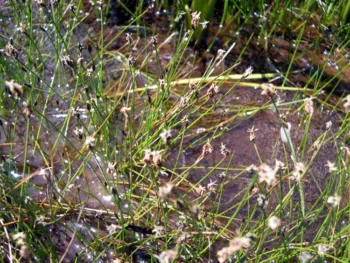
Black sand spikerush is a member of the sedge family, giving it that characteristic grass-like appearance that many water-loving plants share. Don’t let the grass look fool you though – this is actually a sedge, which you can usually tell by its triangular stems (remember the old saying: sedges have edges). As a perennial, it’ll stick around year after year once established, forming colonies in wet areas.
Where Does It Come From and Where Is It Now?
Originally hailing from Australia and New Zealand, black sand spikerush has established itself in parts of California and Nevada. It’s what botanists call a non-native naturalized species – meaning it wasn’t originally from here, but it’s managed to reproduce and persist on its own in the wild without any help from humans.
- Species observed
- No observations
The Wetland Connection
Here’s something really important to know about black sand spikerush: it’s what’s called an obligate wetland plant. This means it almost always needs wet conditions to survive and thrive. You’ll find it in:
- Pond margins and lake edges
- Seasonal wetlands
- Boggy areas
- Consistently moist soil areas
Should You Plant It in Your Garden?
This is where things get a bit complicated. While black sand spikerush isn’t currently listed as invasive or noxious, it is a non-native species that’s already established populations in the wild. For most gardeners, there are better options that will serve your landscape needs while supporting local ecosystems.
If you’re specifically working on wetland restoration or have a specialized water feature, you might consider it for these applications:
- Pond or water garden margins
- Rain gardens with consistent moisture
- Naturalized wet areas where you want low-maintenance ground cover
Better Native Alternatives
Before you decide on black sand spikerush, consider these native sedges and rushes that will provide similar benefits while supporting local wildlife:
- Nebraska sedge (Carex nebrascensis) – native wetland sedge
- Clustered field sedge (Carex praegracilis) – drought-tolerant native option
- Baltic rush (Juncus balticus) – native rush for wet areas
Growing Conditions and Care
If you do choose to work with black sand spikerush, here’s what it needs to be happy:
- Moisture: Consistent wet to moist soil – this plant does not tolerate drought
- Light: Full sun to partial shade
- Soil: Adaptable to various soil types as long as they stay wet
- Climate: Hardy in USDA zones 8-10 based on its current range
Once established, black sand spikerush is relatively low-maintenance, but remember that low-maintenance still means keeping those roots wet!
Wildlife and Pollinator Value
Like most sedges, black sand spikerush is wind-pollinated rather than relying on insects, so it doesn’t offer much in the way of pollinator support. Its wildlife benefits are also limited compared to native alternatives that local animals have evolved alongside.
The Bottom Line
While black sand spikerush can serve a purpose in very specific wetland applications, most gardeners will be better served by choosing native alternatives that provide similar aesthetic and functional benefits while supporting local ecosystems. If you’re passionate about wetland gardening, take some time to explore the many beautiful native sedges and rushes that are perfectly adapted to your local conditions – your local wildlife will thank you for it!