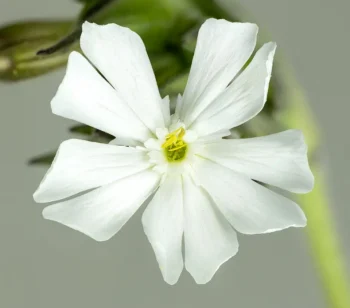
Bladder Campion: A Hardy Wildflower with European Roots
If you’ve ever spotted delicate white flowers with peculiar inflated bladders behind the petals growing wild in fields or along roadsides, you’ve likely encountered bladder campion (Silene latifolia). This hardy little wildflower has quite the story to tell – and whether it belongs in your garden depends on what you’re hoping to achieve.
What is Bladder Campion?
Bladder campion is a forb – essentially a non-woody flowering plant that lacks significant woody tissue above ground. It’s classified as both biennial and perennial, meaning some plants live for two years while others persist for multiple seasons. The plant gets its common name from the distinctive inflated calyx (the green part behind the petals) that looks remarkably like a tiny balloon or bladder.
Where Does It Come From and Where Does It Grow?
Here’s where things get interesting: bladder campion isn’t actually native to North America. This European and western Asian native has become a naturalized resident across much of the continent. It’s a non-native species that reproduces on its own and has established itself from Alaska and Canada all the way down through the lower 48 states, even reaching Greenland and St. Pierre and Miquelon.
You can find bladder campion growing in an impressive list of states and provinces, from Alabama to Wyoming, and from Alberta to Newfoundland. It’s quite the traveler and has proven remarkably adaptable to North American conditions.
- Species observed
- No observations
Should You Plant Bladder Campion?
This is where gardeners need to weigh their options carefully. Bladder campion offers some appealing qualities – it’s incredibly hardy (thriving in USDA zones 3-9), drought tolerant, and low maintenance. The white flowers, which bloom from summer into fall, can be quite charming in the right setting and do attract pollinators like moths, bees, and butterflies.
However, there are some considerations to keep in mind:
- It can spread aggressively through self-seeding
- It has a somewhat weedy appearance that may not suit formal garden designs
- As a non-native species, it doesn’t provide the same ecological benefits as native plants
Where Bladder Campion Works Best
If you’re considering bladder campion, it’s best suited for:
- Wildflower gardens and naturalized areas
- Meadow plantings
- Areas where you want low-maintenance ground cover
- Sites with challenging growing conditions
It’s not the best choice for formal perennial borders or carefully curated native plant gardens.
Growing Conditions and Care
One of bladder campion’s selling points is its easygoing nature. Here’s what it prefers:
- Light: Full sun to partial shade (though it flowers best in full sun)
- Soil: Well-drained soils of various types – it’s not picky
- Water: Drought tolerant once established
- Maintenance: Very low – this plant pretty much takes care of itself
Planting and Care Tips
If you decide to grow bladder campion, here’s how to succeed:
- Plant seeds in spring or fall directly in the garden
- No special soil preparation needed – it adapts to most conditions
- Water occasionally during establishment, then let nature take over
- Deadhead flowers if you want to prevent aggressive self-seeding
- Divide clumps every few years if desired
Consider Native Alternatives
While bladder campion can be an easy addition to casual garden spaces, consider exploring native alternatives that provide greater ecological benefits. Native white-flowered plants like wild bergamot, white wild indigo, or native asters can offer similar aesthetic appeal while supporting local wildlife and ecosystems more effectively.
The Bottom Line
Bladder campion is a hardy, low-maintenance plant that can work well in the right setting. It’s not invasive enough to cause major ecological concerns, but it’s also not contributing as much to local ecosystems as native plants would. If you have a casual, naturalized garden space and appreciate easy-care plants with unique flowers, bladder campion might be worth considering. Just be prepared for its enthusiastic self-seeding habits, and always consider native alternatives first when planning your garden.