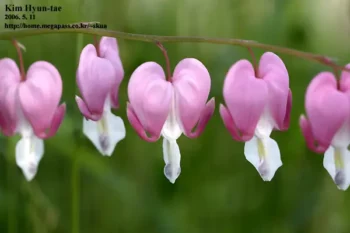
Bleeding Heart: A Charming Addition to Your Shade Garden
If you’re looking to add a touch of whimsy and romance to your garden, the bleeding heart (Lamprocapnos spectabilis) might just steal your heart. This perennial charmer has been captivating gardeners for generations with its distinctive heart-shaped flowers that seem to dangle like tiny pink and white lockets from gracefully arching stems.
What Makes Bleeding Heart Special
Bleeding heart is a herbaceous perennial that belongs to the forb family – essentially a non-woody plant that dies back to the ground each winter and returns with renewed vigor each spring. What sets this plant apart is its absolutely unmistakable flowers. Each bloom looks like a perfect little heart, complete with a drop of blood at the bottom, which gives the plant its evocative common name.
The plant was previously known to botanists as Dicentra spectabilis, so don’t be surprised if you see it listed under that name in older gardening references. Despite the name change, this is the same beloved plant that has been gracing gardens for decades.
Origins and Distribution
Bleeding heart isn’t native to North America – it originally calls the cool, mountainous regions of Siberia, northern China, Korea, and Japan home. However, it has naturalized in several U.S. states where conditions suit its preferences. You’ll find established populations in Connecticut, Indiana, Kentucky, Maine, New York, Pennsylvania, and Wisconsin.
- Species observed
- No observations
Garden Appeal and Design Uses
This plant is a showstopper in late spring to early summer when its pink and white heart-shaped flowers create a spectacular display. The blue-green, deeply divided foliage provides an attractive backdrop even when the plant isn’t blooming. Bleeding heart typically reaches 2-3 feet in both height and width, making it perfect for:
- Shade gardens where few other plants provide such dramatic blooms
- Woodland gardens for a naturalized look
- Cottage gardens for old-fashioned charm
- Perennial borders as an early-season focal point
- Specimen planting or grouped for greater impact
One thing to keep in mind: bleeding heart is what gardeners call an ephemeral perennial. After its spring show, it gradually goes dormant by mid to late summer, leaving a gap in your garden. Smart gardeners plan for this by planting companions like hostas or ferns that will fill in the space.
Growing Conditions and Care
Bleeding heart is surprisingly adaptable and can thrive in USDA hardiness zones 2 through 9, making it suitable for most of the continental United States. Here’s what this beauty needs to flourish:
- Light: Partial to full shade (morning sun with afternoon shade is ideal)
- Soil: Moist but well-draining soil rich in organic matter
- Water: Consistent moisture, especially during the growing season
- Temperature: Prefers cool, humid conditions
Planting and Care Tips
Getting bleeding heart established in your garden is relatively straightforward:
- Plant in fall or early spring when temperatures are cool
- Choose a spot with morning sun and afternoon shade
- Amend the soil with compost or well-rotted manure
- Keep the soil consistently moist but not waterlogged
- Apply a 2-3 inch layer of mulch to retain moisture and keep roots cool
- Allow the foliage to die back naturally – resist the urge to cut it down early
- Divide clumps every 3-4 years to maintain vigor
Wildlife and Pollinator Benefits
During its bloom period, bleeding heart attracts bees and other pollinators to your garden. The unique flower shape makes it particularly appealing to certain bee species that can navigate the heart-shaped blooms to reach the nectar inside.
Should You Plant Bleeding Heart?
Bleeding heart can be a wonderful addition to the right garden setting. While it’s not native to North America, it’s well-behaved and not considered invasive. It provides valuable early-season color and pollinator support when many native plants are just getting started for the year.
If you’re committed to using only native plants, consider these native alternatives that provide similar spring interest:
- Wild columbine (Aquilegia canadensis) for delicate, nodding flowers
- Wild ginger (Asarum canadense) for heart-shaped foliage and woodland appeal
- Dutchman’s breeches (Dicentra cucullaria) for similar flower form in white
Whether you choose bleeding heart or a native alternative, you’ll be adding spring magic to your shade garden. Just remember to plan for summer companions to fill the space when your bleeding heart takes its seasonal rest – after all, even the most charming plants need their beauty sleep!