Blessed Milkthistle: A Beautiful But Potentially Problematic Garden Guest
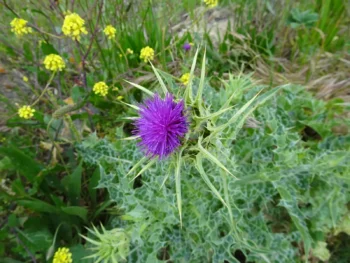
If you’ve ever spotted a striking thistle with distinctive white-veined leaves and purple flowers, you might have encountered blessed milkthistle (Silybum marianum). This eye-catching plant has quite the reputation – beloved by some gardeners for its ornamental value and medicinal properties, but viewed with caution by others due to its tendency to spread beyond welcome.
What Exactly Is Blessed Milkthistle?
Blessed milkthistle is an annual to biennial forb, meaning it’s an herbaceous plant that completes its life cycle in one to two years. Originally hailing from the Mediterranean region and Southern Europe, this non-native species has made itself quite at home across much of North America. You might also know it by its scientific synonyms Carduus marianus or Mariana mariana, though Silybum marianum is the current accepted name.
Where Does It Grow?
This adaptable plant has established populations across an impressive range of locations, from Alberta and British Columbia down to Alabama and Texas, and from coast to coast including states like California, New York, and everywhere in between. It’s found in over 30 U.S. states and several Canadian provinces, showing just how well it adapts to different climates and conditions.
- Species observed
- No observations
The Good, The Bad, and The Spiny
Let’s be honest about blessed milkthistle – it’s a plant that comes with both benefits and concerns:
The Appeal
- Striking appearance with large, glossy leaves marked by distinctive white veining
- Showy purple flower heads that bloom from late spring through summer
- Excellent pollinator magnet, attracting bees, butterflies, and other beneficial insects
- Historically valued for medicinal properties
- Drought tolerant once established
The Concerns
- Listed on Alabama’s invasive species Watch List
- Self-seeds readily and can spread aggressively
- Spiny nature makes handling challenging
- May outcompete native plants in some areas
Growing Conditions and Care
If you’re in an area where blessed milkthistle isn’t considered invasive and you decide to grow it, here’s what it needs:
- Sunlight: Full sun for best performance
- Soil: Well-drained soil; quite tolerant of poor soils
- Water: Drought tolerant once established, but appreciates regular water during germination
- Climate: Generally hardy in USDA zones 7-10
- Planting: Direct seed in fall or early spring; seeds need light to germinate
A Word of Caution
Before adding blessed milkthistle to your garden, check with your local extension office about its status in your area. In places like Alabama where it’s on the Watch List, it’s best to admire it from afar rather than invite it into your garden.
Native Alternatives to Consider
If you’re drawn to the thistle look but want to support native ecosystems, consider these beautiful native alternatives:
- Purple prairie clover (Dalea purpurea)
- Wild bergamot (Monarda fistulosa)
- New England aster (Symphyotrichum novae-angliae)
- Native thistle species specific to your region
The Bottom Line
Blessed milkthistle is undeniably attractive and offers real benefits to pollinators, but its potential to become invasive makes it a risky choice for many gardens. If you’re committed to growing it, do so responsibly by preventing it from self-seeding beyond your property boundaries. However, you’ll likely find that native alternatives offer similar beauty while supporting local ecosystems – a true win-win for both your garden and the environment.
Remember, the best garden plants are often those that work harmoniously with their surroundings rather than fighting against them. Choose wisely, and your garden will thank you for it!