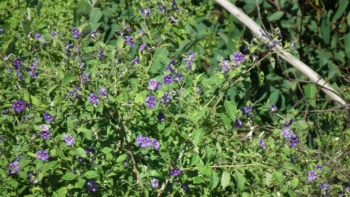
Blue Potatobush: A Colorful Non-Native Addition to Your Garden
Meet the blue potatobush (Lycianthes rantonnetii), a cheerful shrub that’s been winning hearts in California gardens with its prolific purple-blue blooms. While this South American native isn’t originally from our neck of the woods, it’s made quite a home for itself in the Golden State’s Mediterranean climate.
What Exactly Is Blue Potatobush?
Blue potatobush is a perennial shrub that typically grows 4-5 feet tall and wide, though it can stretch up to 13-16 feet under ideal conditions. Don’t let the potato in its name fool you – this plant is actually related to tomatoes and peppers, all members of the nightshade family. You might also see it listed under its old botanical name, Solanum rantonnetii.
This multi-stemmed woody plant produces clusters of vibrant purple-blue flowers with bright yellow centers that bloom almost year-round in mild climates. The flowers give way to small red berries, adding another layer of visual interest to your landscape.
Where Does It Grow?
Originally hailing from Argentina and Paraguay, blue potatobush has found a comfortable home in California, where it grows spontaneously and persists in the wild. It thrives in USDA hardiness zones 9-11, making it perfect for areas with mild winters and warm summers.
- Species observed
- No observations
Why Gardeners Love (and Sometimes Question) This Plant
Blue potatobush offers several appealing qualities that make it a popular choice:
- Nearly continuous blooming in mild climates
- Attracts beneficial pollinators like bees, butterflies, and hummingbirds
- Drought tolerant once established
- Fast-growing and relatively low-maintenance
- Versatile – works as a specimen plant, hedge, or container plant
However, as a non-native species that reproduces on its own, some gardeners prefer to stick with plants indigenous to their region. While blue potatobush isn’t currently listed as invasive, it’s always worth considering native alternatives that provide similar benefits while supporting local ecosystems.
Perfect Garden Settings
Blue potatobush shines in Mediterranean-style gardens, drought-tolerant landscapes, and cottage garden settings. Its informal growth habit and abundant flowers make it ideal for:
- Mixed perennial borders
- Informal hedges or screens
- Container gardening on patios
- Pollinator gardens
- Low-water landscapes
Growing Blue Potatobush Successfully
This adaptable shrub is relatively easy to grow once you understand its preferences:
Light: Provide full sun to partial shade. More sun typically means more flowers.
Soil: Well-draining soil is essential. Blue potatobush tolerates various soil types but struggles in waterlogged conditions.
Water: Regular watering during the first year helps establish strong roots. Once mature, it’s quite drought tolerant, though occasional deep watering during dry spells keeps it looking its best.
Maintenance: Prune lightly in late winter or early spring to maintain shape and encourage bushier growth. Remove spent flowers to promote continued blooming, though this isn’t strictly necessary.
Protection: In borderline climates, protect from frost with mulch or temporary covers during cold snaps.
Native Alternatives to Consider
If you’re leaning toward native options that offer similar benefits, consider these California natives:
- Ceanothus species (California lilac) for blue flowers and pollinator appeal
- Salvia species for continuous blooms and hummingbird attraction
- Penstemon species for colorful flowers and easy care
- Ribes species (flowering currants) for early season color and wildlife benefits
The Bottom Line
Blue potatobush can be a delightful addition to the right garden, especially if you’re drawn to its cheerful blooms and easy-care nature. While it’s not native to California, it’s currently not considered problematic either. The choice ultimately comes down to your gardening philosophy and what you hope to achieve in your landscape. Whether you choose blue potatobush or explore native alternatives, you’re sure to create a garden that brings joy to both you and your local pollinators.