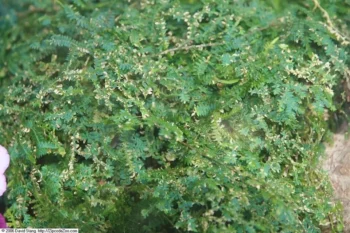
Blue Spikemoss: The Tiny Ancient Plant That’s Not Actually a Moss
Meet blue spikemoss (Selaginella uncinata), one of nature’s most interesting little imposters. Despite its common name, this delicate ground-hugger isn’t actually a moss at all – it’s a spikemoss, which belongs to an ancient group of plants called lycopods that have been around since before the dinosaurs!
What Exactly Is Blue Spikemoss?
Blue spikemoss is a perennial forb that creates beautiful, carpet-like mats of tiny, scale-like leaves. These leaves often display a subtle bluish-green tint that gives the plant its common name. Unlike true mosses, spikemosses are vascular plants, meaning they have tiny internal plumbing systems to move water and nutrients around – pretty impressive for something so small!
As a lycopod, blue spikemoss reproduces through spores rather than seeds or flowers, making it a living link to Earth’s prehistoric past. The plant spreads by creeping along the ground, sending out delicate trailing stems that root as they go.
Where You’ll Find Blue Spikemoss
This little plant has made itself at home across the southeastern United States, including Alabama, Florida, Georgia, Louisiana, and Mississippi. However, it’s important to note that blue spikemoss isn’t native to North America – it’s an introduced species that has naturalized in these areas.
- Species observed
- No observations
You’ll typically spot blue spikemoss in consistently moist to wet areas, as it’s classified as an obligate wetland plant. This means it almost always occurs in wetland conditions and has a strong preference for soggy soils.
How to Identify Blue Spikemoss
Recognizing blue spikemoss is all about looking for these key features:
- Tiny, overlapping scale-like leaves arranged in neat rows along creeping stems
- Low-growing, mat-forming habit that hugs the ground
- Bluish-green coloration, especially on newer growth
- Preference for consistently moist, shaded locations
- Delicate, almost feathery appearance when viewed up close
Is Blue Spikemoss Beneficial in Gardens?
Blue spikemoss can be a charming addition to the right garden setting, particularly if you’re looking for:
- A living carpet for shaded, moist areas where other plants struggle
- Textural interest in woodland or bog gardens
- A unique ground cover for terrariums or container gardens
- An educational plant to showcase ancient plant evolution
However, since this species isn’t native to North America, consider exploring native alternatives that provide similar benefits while supporting local ecosystems. Native mosses, wild ginger, or partridgeberry might offer comparable ground cover appeal with added benefits for local wildlife.
Growing Conditions and Care
If you decide to work with blue spikemoss, success depends on mimicking its preferred wetland conditions:
- Moisture: Consistently wet to moist soil – think bog-like conditions
- Light: Partial to full shade; direct sunlight can be harmful
- Humidity: High humidity levels are essential
- Climate: Best suited for USDA zones 8-11
The plant spreads naturally through spores and creeping growth, so patience is key. Regular misting can help maintain the high humidity it craves, especially in drier climates or indoor settings.
A Word About Native Alternatives
While blue spikemoss isn’t invasive, choosing native plants when possible helps support local wildlife and maintains ecological balance. Consider native mosses, creeping phlox, or wild strawberry for similar ground cover effects that also provide food and habitat for native insects and animals.
Whether you encounter blue spikemoss in the wild or consider it for your garden, take a moment to appreciate this fascinating little survivor from prehistory – it’s been perfecting its ground-hugging lifestyle for millions of years!