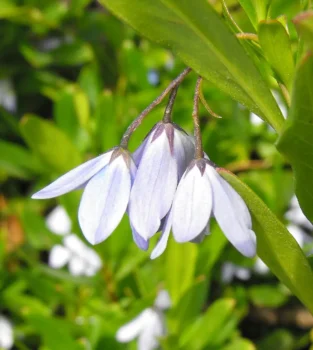
Bluebell Creeper: A Charming Australian Vine for Warm Climate Gardens
If you’re looking for a delicate flowering vine that produces cheerful blue blooms nearly year-round, bluebell creeper (Sollya heterophylla) might catch your eye. This Australian native has found its way into California gardens, where it’s become a popular choice for gardeners seeking long-blooming color with minimal fuss.
What is Bluebell Creeper?
Bluebell creeper is a perennial twining vine that can be either woody or herbaceous, depending on growing conditions. True to its name, this plant produces small, bell-shaped flowers in a lovely shade of bright blue that seem to dance along its stems. The glossy green foliage provides an attractive backdrop for the continuous parade of blooms from spring through fall.
Also known by its botanical name Sollya heterophylla (and sometimes listed under the synonym Sollya fusiformis), this climbing plant brings a touch of Australian charm to gardens in warmer climates.
Where Does Bluebell Creeper Grow?
Originally from western and southwestern Australia, bluebell creeper has established itself in California, where it reproduces on its own in the wild. While it’s considered a non-native species that persists without human intervention, it’s not currently listed as invasive or noxious.
- Species observed
- No observations
Garden Appeal and Design Uses
What makes bluebell creeper attractive to gardeners is its versatility and nearly continuous blooming habit. Here’s how you can use it in your landscape:
- Train it up trellises, fences, or walls as a climbing vine
- Let it cascade from containers or hanging baskets
- Use it as ground cover in Mediterranean or cottage-style gardens
- Incorporate it into coastal gardens where it thrives in mild conditions
The plant’s delicate blue flowers are particularly appealing to bees and other small pollinators, making it a nice addition to pollinator-friendly gardens.
Growing Conditions and Care
Bluebell creeper is surprisingly low-maintenance once you understand its preferences:
- Climate: Hardy in USDA zones 9-11
- Light: Full sun to partial shade (blooms best with some sun)
- Soil: Well-draining soil is essential
- Water: Drought tolerant once established, but benefits from occasional deep watering
Planting and Care Tips
Getting bluebell creeper established is straightforward:
- Plant in spring after the last frost
- Provide some form of support if you want it to climb
- Water regularly during the first growing season to help establish roots
- Once established, reduce watering frequency
- Prune lightly after the main flowering period to maintain shape
- In colder areas of its range, protect from frost
Should You Plant Bluebell Creeper?
While bluebell creeper can be an attractive addition to warm climate gardens, it’s worth considering that it’s not native to North America. If you’re focused on supporting local ecosystems, you might want to explore native alternatives that provide similar benefits to local wildlife.
Some native options to consider instead include:
- California morning glory for a climbing vine with blue flowers
- Wild grape for a vigorous native climber
- Native honeysuckles for pollinator-friendly vines
If you do choose to grow bluebell creeper, be aware that it can self-seed and spread beyond your garden. Regular maintenance and monitoring can help prevent unwanted spread to natural areas.
Ultimately, bluebell creeper offers reliable blooms and easy care for gardeners in suitable climates. Just remember to garden responsibly and consider the broader ecological picture when making your plant choices!