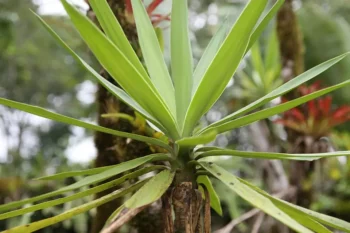
Bluestem Yucca: A Bold Architectural Plant for Warm Climate Gardens
Looking for a plant that makes a statement? Meet the bluestem yucca (Yucca guatemalensis), a striking architectural specimen that brings tropical flair to warm-climate landscapes. With its sword-like leaves and towering flower spikes, this perennial creates instant drama wherever it’s planted.
What is Bluestem Yucca?
Bluestem yucca is a non-native perennial that has established itself in Puerto Rico and the U.S. Virgin Islands, where it reproduces naturally without human intervention. Originally from Guatemala and Central America, this impressive plant is sometimes known by its synonym Yucca elephantipes.
Despite being classified as an herb (a plant without significant woody tissue above ground), don’t let that fool you – this yucca can grow quite large and create a bold presence in your garden.
Where Does Bluestem Yucca Grow?
Currently, you’ll find bluestem yucca thriving in Puerto Rico and the Virgin Islands, where it has adapted well to the tropical climate.
- Species observed
- No observations
Why Consider Bluestem Yucca for Your Garden?
This architectural beauty offers several compelling reasons to include it in your landscape:
- Dramatic visual impact: Creates an instant focal point with its bold, sword-like foliage
- Low maintenance: Once established, it’s incredibly drought-tolerant
- Spectacular blooms: Produces tall spikes of white, bell-shaped flowers that attract pollinators
- Versatile placement: Works well as a specimen plant, in containers, or as part of xeriscapes
- Year-round interest: Provides structure and color throughout all seasons
Ideal Growing Conditions
Bluestem yucca thrives in USDA hardiness zones 9-11, making it perfect for warm, frost-free regions. Here’s what this plant loves:
- Sunlight: Full sun to partial shade
- Soil: Well-draining soil is essential – soggy conditions spell trouble
- Water: Drought-tolerant once established; minimal watering needed
- Climate: Warm temperatures; protect from frost
Perfect Garden Settings
This versatile plant shines in several landscape styles:
- Modern and contemporary gardens
- Xeriscapes and drought-tolerant landscapes
- Mediterranean-style gardens
- Large containers and patio displays
- Tropical and subtropical landscapes
Planting and Care Tips
Growing bluestem yucca successfully is surprisingly straightforward:
- Location: Choose a spot with excellent drainage – waterlogged roots are this plant’s biggest enemy
- Watering: Water regularly during establishment, then reduce frequency significantly
- Fertilizing: Generally unnecessary; these plants prefer lean conditions
- Pruning: Remove spent flower stalks and damaged leaves as needed
- Winter protection: In zone 9, provide protection during cold snaps
Benefits for Wildlife
When bluestem yucca blooms, it becomes a pollinator magnet. The tall spikes of creamy white flowers attract various beneficial insects, including moths and bees, adding ecological value to your garden.
Consider Native Alternatives
While bluestem yucca isn’t considered invasive, supporting native plants is always beneficial for local ecosystems. If you’re in regions where native yuccas grow naturally, consider species like Adam’s needle (Yucca filamentosa) or Spanish bayonet (Yucca aloifolia) for similar architectural appeal with added native plant benefits.
The Bottom Line
Bluestem yucca offers bold beauty with minimal fuss, making it an excellent choice for gardeners in warm climates who want maximum impact with minimum effort. Just remember that good drainage and restraint with the watering can are your keys to success. Whether you’re creating a modern landscape or adding tropical flair to your garden, this striking plant delivers architectural interest that lasts all year long.