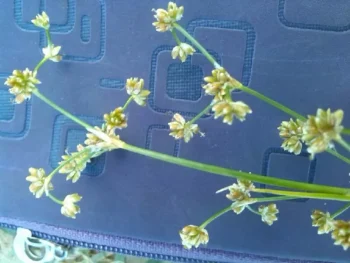
Bluntflower Rush: A Rare Wetland Plant with Limited Garden Potential
Meet the bluntflower rush (Juncus subnodulosus), a rather mysterious member of the rush family that’s managed to establish itself in a small corner of New England. If you’re expecting a detailed growing guide for this perennial grass-like plant, you might be in for a surprise – this particular rush keeps a pretty low profile in both the wild and in gardening circles.
What Exactly Is Bluntflower Rush?
Bluntflower rush belongs to the Juncaceae family, making it a true rush rather than a grass or sedge. As a perennial plant, it comes back year after year, though you’d be hard-pressed to find it doing so in many places. This species has the botanical synonyms Juncus pervetus Fernald, which you might encounter in older botanical references.
Like other rushes, bluntflower rush has that characteristic grass-like appearance that can make it tricky to distinguish from actual grasses or sedges at first glance. However, rushes have their own unique charm and ecological niche in wetland environments.
Where Does It Grow?
Here’s where things get interesting (or limiting, depending on your perspective): bluntflower rush has only been documented growing in Massachusetts within the United States. This extremely limited distribution makes it quite the botanical rarity in American landscapes.
- Species observed
- No observations
The species is non-native to North America, having been introduced from elsewhere and now reproducing on its own in the wild. However, its tiny footprint suggests it’s not exactly taking over the landscape.
Wetland Specialist
If there’s one thing we know for certain about bluntflower rush, it’s that this plant is serious about its water requirements. Classified as an Obligate Wetland species in the Northcentral and Northeast regions, it almost always occurs in wetland conditions. This means you’ll find it in consistently moist to wet soils, not the average garden bed.
Should You Grow Bluntflower Rush?
Here’s the honest truth: there’s remarkably little information available about growing bluntflower rush in cultivation. Its extremely limited distribution and lack of presence in the horticultural trade suggest it’s not commonly grown or even readily available.
While we don’t have evidence that it’s invasive or problematic, its non-native status gives us pause. As responsible gardeners, we generally recommend focusing on native plants that provide known benefits to local ecosystems.
Better Native Alternatives
If you’re drawn to the idea of growing rushes in wet areas of your landscape, consider these native alternatives that offer similar aesthetic appeal with proven ecological benefits:
- Soft rush (Juncus effusus) – A widely native rush perfect for rain gardens and pond edges
- Path rush (Juncus tenuis) – A smaller native rush that tolerates some foot traffic
- Baltic rush (Juncus arcticus var. littoralis) – Great for coastal and inland wetland gardens
The Bottom Line
Bluntflower rush remains something of an enigma in the gardening world. While it’s not necessarily harmful, its non-native status, extremely limited distribution, and lack of available cultivation information make it a questionable choice for most gardens. Your local ecosystem will likely benefit more from well-established native rush species that provide known habitat and food sources for wildlife.
If you’re specifically interested in this species for research or conservation purposes, you’ll want to work with botanical institutions or specialized native plant societies, as it’s unlikely to be found in typical nursery settings.